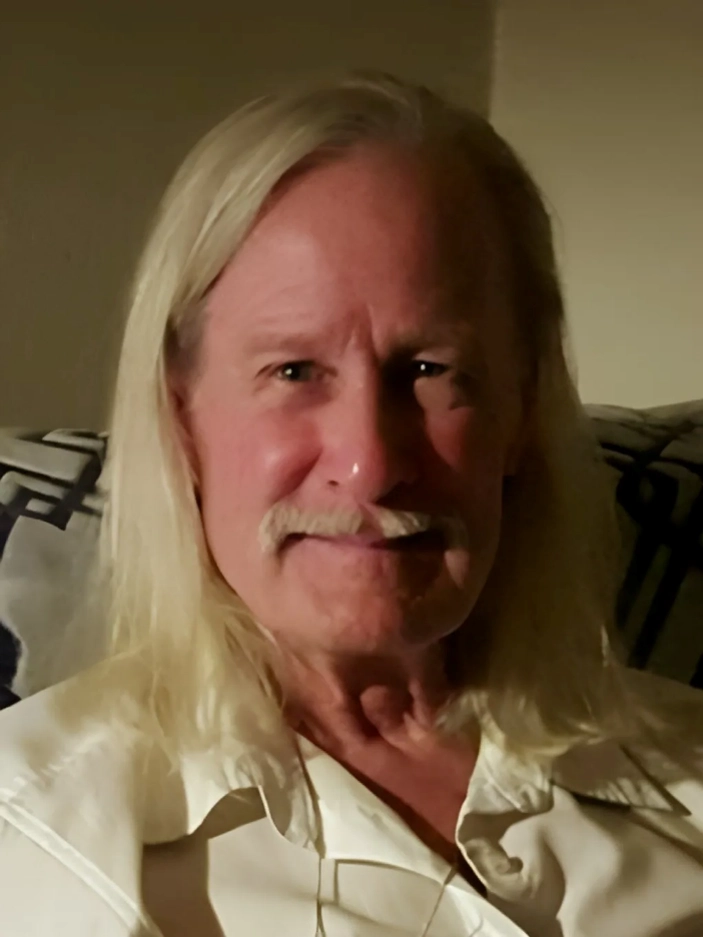
From the battlefields of Vietnam to classrooms in California and decades of spiritual contemplation, American author Mark K. Olsen has followed an extraordinary path. Through two books examining God-realisation, Christian mysticism and the hidden dimensions of faith, he invites readers in Britain and around the world to reconsider what it means to know oneself, understand religion and encounter the divine.
A Life That Refused to Accept Easy Answers
Some lives seem to turn on one big moment. Other lives spread out in so many directions that it feels like more than one person.
Mark K. Olsen’s path fits the second kind.
He has been a boy who grew up in the woods of northern Minnesota. He became an American soldier in Vietnam. Later, he ran a construction business. After that, he taught in California and earned awards for his work. He also became a father, then a grandfather. In the end, he wrote books and returned again and again to old questions about spirit and meaning. When you look past the labels, the story keeps pointing to one drive. He wants to understand what being human is all about, and what that means for God.
For over fifty years, Olsen has followed what he calls God-realisation. He describes it as a personal inward process. He pulls ideas from Christian mysticism. He studies Buddhist esoteric teachings. He reads the Bible closely. He also includes events from his own life, the kind that do not fit neatly into a simple timeline.
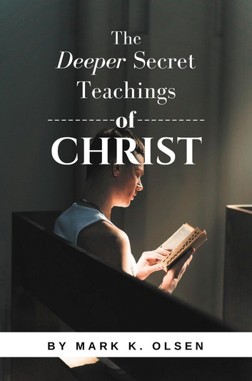
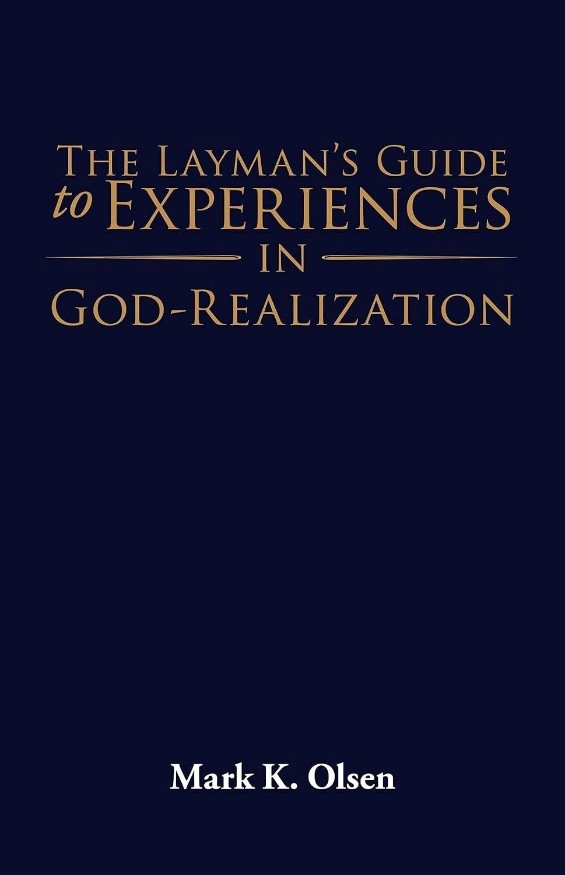
Out of that work came two books. The Layman’s Guide to Experiences in God-Realization. The Deeper Secret Teachings of Christ.
In both, he asks readers to pause. He pushes them to look at whether the core of religion is found in buildings, inherited beliefs, or outward habits. He suggests a different focus instead. He points to a change in how a person thinks and feels on the inside.
That is a tough claim, especially now. Many people blend faith, private spirituality, and everyday life in new ways. Olsen does not treat these thoughts as distant ideas. They have been part of his days for a long time. His start did not come from school arguments or quiet church rooms.
It began after the war.
From the Minnesota Wilderness to the Vietnam War
Olsen was born and raised in a small town in northern Minnesota, where outdoor life was inseparable from family tradition.
His parents were enthusiastic hunters and fishermen. Alongside his two brothers, he grew up eating almost entirely wild game, experiencing a childhood shaped by the rhythms of nature and the practical realities of rural American life. The environment encouraged independence, resilience and an appreciation for the natural world.
After completing high school, Olsen attended several universities over four years. His education was interrupted when he was drafted into military service and sent to Vietnam. The war would become one of the most consequential experiences of his life.
For many American veterans, Vietnam represented not only a military conflict but a profound confrontation with mortality, suffering and the limits of familiar assumptions.
Olsen’s experience also introduced him to an unexpected spiritual tradition.
While serving in Vietnam, he says, a Buddhist priest initiated him into an esoteric spiritual path that the priest understood to have ancient origins. At the time, Olsen admits, he had little understanding of the significance that initiation would eventually hold. Raised in a Christian family, he was entering a tradition that appeared culturally and theologically distant from his upbringing. Yet the encounter became an important part of a much longer journey.
After returning to the United States in 1971, Olsen faced the difficult process of recovering from what he had experienced and witnessed during the war. Rather than setting aside the questions that emerged, he began investigating them more deeply.
What is consciousness? Does human identity extend beyond physical existence? Can spiritual truths be experienced directly? And how might such experiences relate to Christianity?
These questions would eventually reshape his understanding of faith.
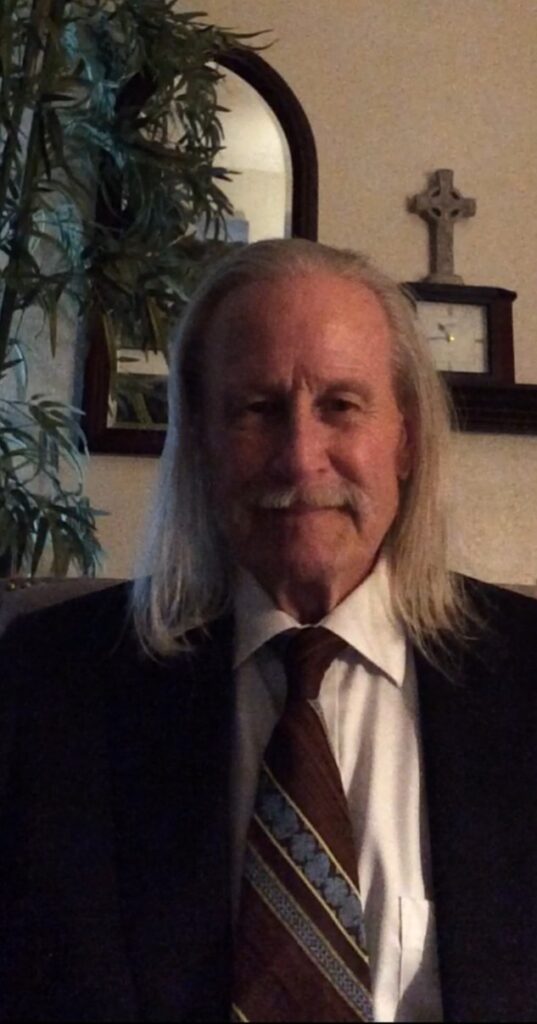
An Unconventional Career Before Becoming an Author
Olsen kept a grounded life even while he pursued spiritual matters. After he came back from Vietnam, he went back to school. He later earned a master’s degree in English. He then worked about 20 years in construction. During that time, he co-owned a small company named Blue Star with his brother.
That job took steady discipline and real physical work. It also came with business duties. The daily grind felt very different from the quieter interests he was developing at the same time.
Later, Olsen shifted into teaching. He became a high school teacher at a school that serves minority students in the Los Angeles area.
He stayed in the classroom for 22 years.
While he was teaching, he received notice from the Carlston Foundation. Olsen said they named him one of five standout teachers in California who worked in minority schools. They also gave him a large stipend. To him, that award showed more than his spiritual writing. It pointed to his focus on education and on helping young people grow.
Teaching also gave him a skill he would use in his books later. He learned how to explain difficult ideas so other people could actually follow them.
His work ran alongside family duties. He handled marriage, then raising children, and later becoming a grandparent. Now, he splits his time between Minnesota and California.
He only started turning his years of spiritual study into books for a wider audience after he retired from teaching.
Fifty Years of Devotion: A Spiritual Discipline Beyond the Ordinary
One of the most remarkable aspects of Olsen’s account is the extraordinary consistency of his devotional practice. For approximately 50 years, he says, he maintained four devotional sessions each day.
Some were relatively brief. Others continued for hours. These sessions involved studying spiritual teachings, contemplating what he regarded as profound truths and attempting to apply the insights he gained to ordinary life. His commitment continued while he worked in construction, taught school and fulfilled family responsibilities.
In this respect, Olsen’s approach differs from the popular image of spiritual enlightenment as a sudden revelation or a dramatic moment of transformation. Instead, he describes spiritual development as a sustained discipline requiring persistence, sincerity and a willingness to examine oneself.
He believes that intellectual understanding alone is insufficient.
A person may read religious texts, attend worship services or become familiar with theological arguments without necessarily experiencing the inward transformation that Olsen considers essential. His emphasis is therefore on practice.
Study must become contemplation. Contemplation must influence behaviour. And spiritual understanding, in his view, must eventually become part of everyday consciousness. His ideas also raise an important question for modern society: what happens when spiritual development is approached with the same seriousness that people devote to careers, education or physical training?
For Olsen, the answer lies in the possibility of a deeper relationship with what he calls the Christ within.
The Hidden Connections Between the World’s Religions
Olsen’s most striking claim is that the world’s major religions rest on one shared spiritual base. In his view, the surface gaps are real. Still, he says the deeper core stays the same beneath rituals, language, history, and theology.
He also says serious students in different faiths can meet similar inner events. They may do so after long study, deep meditation, dreams, visions, and a form of out-of-body awareness.
Olsen treats these accounts as signs that a single spiritual reality exists.
He then frames a person in a new way. A human is not only a body and a role in life. He says each person is a soul involved in a larger growth process. To explain that growth, he uses terms such as higher self, Christ self, and stages of spiritual awareness. He adds that progress can take a very long time. Each soul moves at its own pace, shaped by choices and readiness.
In the end, Olsen holds that every soul can reach the top spiritual level, even if the path takes what he calls eternities. He also keeps that free will matters and stays central. All of this is his personal metaphysical view. It is not a result proven by science, and it is not a standard doctrine held by all religious groups.
Mainstream Christian theology, for instance, does not match his ideas about rank in spirituality, the growth of souls, or how Christianity links with esoteric teachings. Even so, his views fit into an older line of mystical thinking.
Christian mystics, Buddhist practitioners, Hindu thinkers, and many others have asked questions about mind, identity, and the chance of direct contact with the deepest truth. The traditions are not the same. Their differences are often large. Yet they all show strong interest in inner life, which helps explain Olsen’s work. His books ask readers to look at these links. They do not demand that readers drop careful judgment.
Why Mark K. Olsen’s Message Matters to Readers in the United Kingdom
Britain is a strong place to test Olsen’s ideas. The United Kingdom has long held debates about Christian theology. It has also seen reform, philosophy, and odd forms of spiritual trial. At the same time, today’s Britain is changing its religious labels.
In the 2021 Census for England and Wales, 46.2% said they were Christian. 37.2% said they had no religion.
So, the pattern looks mixed. People still talk about meaning, morality, and spirit, but old labels do not hold the same grip. Olsen joins this debate from a less usual angle. He does not push the idea that traditional faith must be thrown out.
Instead, he argues that the teachings people already have may point to deeper lived experience. That part seems meant for closer study. If you still count yourself Christian, his books can feel like a way to look at Scripture alongside contemplation and day to day belief. If you call yourself spiritual but not religious, his writing may help you see how long- standing church forms can meet personal experience.
For readers who are secular, his life can also raise questions about why people look for purpose. This can be extra sharp after trauma or big personal shifts.
There is another link to Britain that matters too. His story fits with British interest in religious mysticism.
Julian of Norwich comes to mind, and also The Cloud of Unknowing. Both explored inward prayer, quiet thought, and the ways thinking can fail when it tries to reach God. Olsen is not the same as them. Still, the comparison shows that inward spiritual seeking has been part of British Christianity for a long time.
Education is also a key British piece here.
Olsen spent over twenty years teaching young people from minority communities. He showed that a life shaped by spiritual questions can still include steady public work. With Britain facing arguments about social rifts, loneliness, gaps between generations, and cultural difference, his stress on reflection and personal duty can spark serious conversation. His experiences also touch veterans and their families.
Leaving the armed forces and moving into civilian life can bring hard questions about identity and purpose. Olsen’s account shows one way someone can respond. But spiritual practice should not be treated as a replacement for help from professionals when it is needed. For British readers, what matters most is not whether they accept his final religious views.
It is the kind of questions his story points people toward.
Can religious traditions speak across cultures? Can someone reshape beliefs they inherited without disrespecting where they came from? And can a steady inner life change how a person treats others?
Those questions extend far beyond any single denomination.
Why His Story Matters to the Wider World
Olsen’s work matters internationally for more than one reason. A key part is how different cultural currents met and formed it. Olsen grew up in the United States inside a Christian home. During service in an Asian war, he encountered Buddhist esoteric practice.
After that, he went back to the United States.
He then looked into how those experiences related to his earlier faith. Because of this, his life mirrors a wider pattern. People across the world meet, share space, and run into new belief systems. Migration plays a role, and so does online communication. As culture exchange ideas, religions often come into closer contact.
Many people now face views that do not match what their families taught. These moments can lead to confusion.
They can also open room for real conversation. Olsen’s writing leans toward dialogue. He does this with a steady belief that spiritual traditions may connect at a deeper level.
Some readers may not agree with him. Still, the call to look at other faiths with interest matters beyond one country. His path also highlights the need to keep learning. He did not take a straight academic route in theology.
His interests lived on through years of working in construction, teaching, and caring for his family. Only later did he become the focus of published books. That path disputes a common idea. It suggests that important thinking or art must start early. It also shows how later years can bring clear links together.
With time, lived experience can turn into ideas people can share. With a world facing a growing older population, this point lands strongly. Olsen’s work also makes people ask something else. What is the link now between information and wisdom.
People have access to religious texts, arguments, and spiritual lessons faster than ever. But having data does not ensure understanding. Olsen points readers toward slow work of the mind.
He stresses continued thought, careful focus, and using ideas in daily life. In a time of rush, noise, and constant demands for attention, that stance reaches wider than religion.
Even if someone reads it in a non-religious way, the call to reflect still deserves thought.
A Public Voice Without a Personal Social Media Presence
Unlike many contemporary authors, Olsen does not personally engage in social media. His books have been promoted online by publishing companies, but his own public engagement has largely developed through interviews, literary features and traditional media appearances.
He has participated in numerous conversations with Dr Angela Chester on The Daily Spark, alongside appearances on podcasts, radio programmes and other interview platforms.
His story and writing have also appeared in publications including Passioneer, The New Narrative and America Inspire Magazine. These appearances have introduced his work to audiences interested in spirituality, personal transformation and unconventional interpretations of Christian teaching.
Yet Olsen’s approach remains notably different from the attention-driven strategies often associated with modern author promotion. He presents his books primarily as the outcome of a personal search rather than as products of a commercial brand.
He does not represent other businesses, organisations or product lines.
His focus remains on the two books and the ideas contained within them.
The Search That Continues Beyond the Page
After more than half a century of spiritual devotion, Mark K. Olsen has reached a stage of life when many people might prefer to look backwards. Instead, his writing continues to examine questions that remain unresolved for much of humanity.
What is the nature of the self? How should religious experience be understood? What connects different spiritual traditions? And how can a person live with greater purpose?
His answers are shaped by a life that has moved through war, education, manual labour, family responsibilities and decades of contemplation. That combination gives his story a distinctive character.
He is neither simply a theologian writing from an academic institution nor a public personality seeking attention through spiritual trends.
He is an author attempting to communicate the conclusions of a deeply personal and sustained search. For readers in Britain, his books offer a perspective on Christianity, mysticism and the enduring role of contemplation in a changing society.
For international audiences, his experiences illustrate how questions of faith can cross national, cultural and religious boundaries.
And for those who may never share his beliefs, his journey still offers a broader human observation: a life can be redirected by difficult experiences, sustained by curiosity and transformed through years of committed inquiry.
Olsen’s two books do not settle humanity’s oldest spiritual questions.
Nor do they need to.
Their contribution lies in presenting one man’s attempt to confront those questions with extraordinary persistence. From the forests of Minnesota to the battlefields of Vietnam, from California classrooms to the quiet discipline of daily contemplation, his life has followed an unpredictable course.
What began as an effort to understand his own experiences eventually became a message intended for others.
More than fifty years later, the search continues. And, perhaps that is the most enduring element of Mark K. Olsen’s story: not the certainty of every answer he offers, but the determination to keep asking questions that have occupied humanity for centuries.
About the Author and His Books
Mark K. Olsen is an American author, retired educator and Vietnam veteran whose writing explores Christian mysticism, God-realisation, spiritual consciousness and biblical interpretation. He divides his time between Minnesota and California.
His two books are available through major bookselling platforms, including Amazon and other retailers.