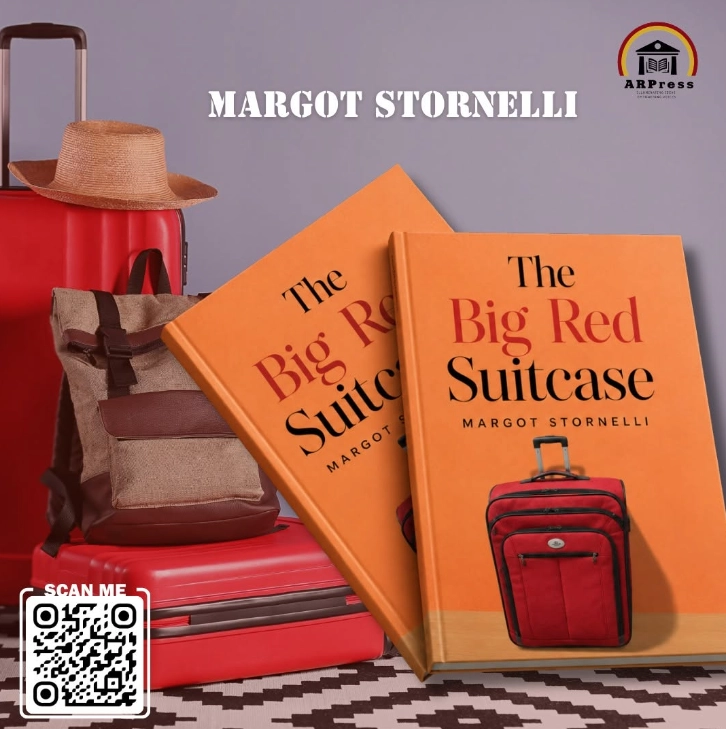
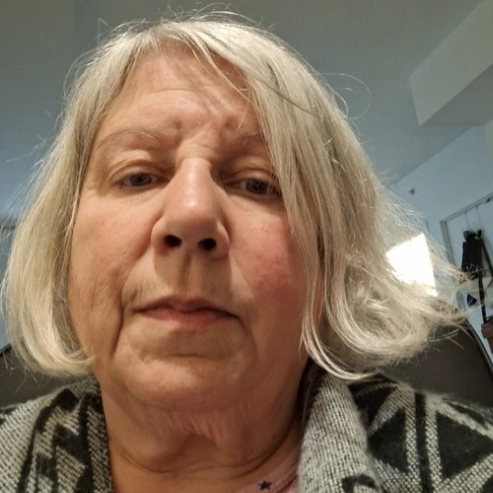
From an American childhood filled with cross-country adventures to an unforgettable exchange year in the Netherlands, a new life in Canada and a memoir reaching international book fairs, Margot Stornelli’s journey is a testament to the power of memory, belonging and the stories families leave behind. As her book travels from London to Asia and North America, her experiences offer a timely reflection on identity, migration and the connections that endure across borders.
A Suitcase Filled with More Than Memories
A suitcase is usually associated with departure. It carries the essentials of a journey: clothing, personal belongings and the small comforts that make unfamiliar places feel a little more like home. But sometimes, what we carry from one destination to another becomes far more significant than anything that can be packed.
For Canadian author Margot Stornelli, the idea of travel is inseparable from a lifetime of discovery, relationships and the unexpected decisions that eventually shape a person’s identity.
Her memoir, The Big Red Suitcase, emerged from a desire that was both deeply personal and remarkably universal: to preserve the experiences of one generation so they would not disappear before the next had an opportunity to understand them.
Stornelli is a retired secondary school librarian living in the Niagara Peninsula of Southern Ontario, Canada. She is also a mother, grandmother, lifelong reader and traveller whose life has crossed geographical and cultural boundaries.
Born in Rochester, New York, she grew up in a family that considered travel an essential part of education. Her childhood adventures across the United States and Canada eventually led to Europe, where an exchange programme introduced her to a different language, culture and way of life.
Years later, an ordinary weekend trip to Toronto would change the direction of her future.
She met the man who would become her husband, moved across the international border and established a new life in Canada.
Decades later, after raising a family and dedicating 20 years to school libraries, Stornelli found herself confronting a question familiar to many grandparents: how much do younger generations really know about the lives that came before them?
Her answer was to write.
What began as an effort to preserve family history became a published memoir that has been showcased at international literary events, including the London Book Fair, the Beijing International Book Fair and the Hong Kong Book Fair.
Yet behind that growing international exposure remains a simple and meaningful purpose. Stornelli wanted her grandchildren to know where they came from.
A Childhood That Made the World Feel Accessible
Long before Stornelli considered becoming an author, her parents were teaching her to look beyond the familiar. Growing up in Rochester, New York, she experienced a childhood enriched by family road trips, historical destinations and cultural exploration. Her parents took the family across the United States and Canada, creating opportunities to encounter different communities, landscapes and traditions.
Two journeys to Europe extended that education beyond North America.
These experiences introduced Stornelli to the idea that travel could be more than a holiday. It could become a way of understanding how other people lived, how societies developed and how history influenced everyday life.
For a young person growing up in the United States, such encounters offered an early appreciation of the world’s diversity.
They also encouraged independence.
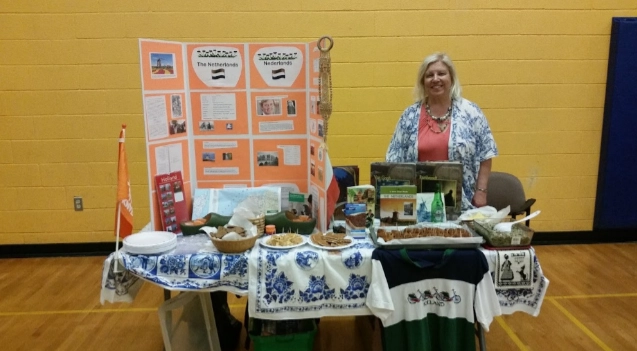
During high school, Stornelli made a decision that would influence her personal life for decades: she chose to spend a year abroad as an exchange student. Her destination was the Netherlands.
The experience placed her in an unfamiliar environment where daily routines, cultural expectations and social customs differed from those she had known at home. Rather than simply observing Dutch life as a visitor, she became immersed in it.
She developed a strong affection for the country and its culture, forming friendships with her host family and others that would continue long after the exchange year ended.
Those relationships became one of the most enduring gifts of the experience.
Over the years, friends and family members visited one another on both sides of the Atlantic. Annual birthday and holiday cards helped sustain connections across considerable distances.
In a world where friendships can sometimes be reduced to brief digital interactions, the longevity of these relationships offers a reminder that cultural exchange can create bonds lasting a lifetime.
For Stornelli, the Netherlands became more than a place she had visited.
It became part of her personal history.
The Weekend in Toronto That Changed Everything
Five years after her exchange experience in Europe, Stornelli travelled to Toronto for a weekend. It was there that she met her future husband.
The encounter eventually led her to relocate from the United States to Canada, beginning another significant chapter of cultural adjustment and personal discovery.
Although the two countries share a long border, a common language across much of their populations and many cultural similarities, moving between them still requires adaptation. Everyday customs, social expectations, national traditions and even subtle differences in language can shape the experience of establishing a new home. For Stornelli, the transition also meant building a future in a country different from the one where she had grown up.
The decision reflected a recurring pattern in her life: meaningful relationships opening doors to unexpected destinations. Her exchange year had introduced her to the Netherlands. A weekend visit brought her to Canada. Both experiences changed her understanding of belonging.
Over time, Southern Ontario became the setting for her family life, professional development and eventual literary ambitions. But relocation did not erase her American upbringing or the European experiences that had influenced her youth.
Instead, these different chapters became layers of a larger identity.
That combination would eventually provide the emotional foundation for The Big Red Suitcase.
From Family Life to a Career in Literacy
After she moved to Canada, Stornelli held several office jobs. Later, she stepped away from paid work so she could raise her children. During that time, she stayed involved in school life. She spent time volunteering in her kids’ classrooms and staying close to what they were learning.
The years at home sparked a new pull toward learning. She became interested again in literacy and reading. She went back to school to finish her post-secondary education. This step showed her drive, and it opened the door to a new work path. Not long after, she built a career in secondary school libraries. She stayed in that role for 20 years.
For Stornelli, the work was not only about sorting books or handling learning materials.
It gave her a chance to support young people as they found their way into reading, research, and storytelling.
School libraries matter in a student’s day-to-day experience. They can expose students to different viewpoints. They help students think on their own. They also give access to information that helps people understand the world better.
Her interest in literacy went past her regular job.
She volunteered with the Ontario Library Association’s Forest of Reading program. The goal was to encourage reading and celebrate Canadian books. She also helped as a volunteer with the Independent Book Publishers Association’s awards program. Those roles brought her into the larger world of books. She met people connected to authors, publishers, and groups that work to bring stories to readers. They also shaped how she thought about publishing.
For a long time, she met books mostly as a teacher and a reader. Afterward, she learned what it means to be the person whose name is printed on the cover.
Retirement, Grandchildren and the Desire to Leave a Legacy
Retirement often brings the opportunity to revisit ambitions postponed during years of employment and family responsibilities. For Stornelli, it also brought the arrival of grandchildren and a growing awareness of the importance of preserving family stories.
She wanted them to understand their maternal heritage: the places, experiences, relationships and decisions that had shaped the lives of earlier generations. Family history is frequently preserved through photographs, letters and stories repeated at gatherings.
But memories can fade. Details become uncertain. The experiences that once seemed unforgettable may gradually disappear as generations change. Stornelli decided to create a more lasting record.
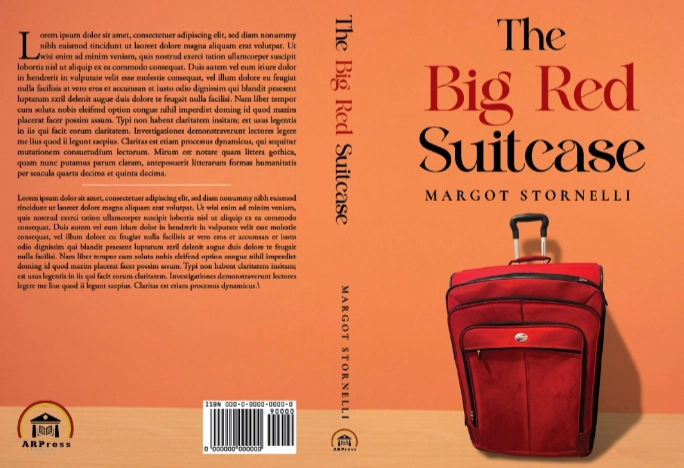
The result was The Big Red Suitcase, a memoir inspired by her personal journey across countries and cultures. The book reflects themes of travel, cultural immersion, adjustment to unfamiliar environments and the emotional significance of the places people come to call home.
Its origins also reveal something important about memoir writing. Not every personal story begins with a desire for public recognition. Some begin with the simple hope that children and grandchildren will one day understand the people who came before them.
For Stornelli, the act of writing transformed personal recollections into a legacy that could be shared beyond the immediate family. As her publishing journey developed, she discovered that the experiences she wanted to preserve could resonate with readers who had never met her.

From Librarian to Published Author: Learning to Tell Her Own Story
Despite spending two decades surrounded by books, writing a memoir presented Stornelli with an unfamiliar challenge. Understanding literature as a reader and librarian was one thing. Transforming decades of personal experiences into a coherent narrative required a different set of skills. She began by organising her memories, drawing on journals, photographs, correspondence and recollections of significant events.
In a March 2026 conversation with writing coach Kevin Johns, Stornelli explained how her initial notes developed into something larger. She began using Microsoft Word to record different episodes from her life, gradually bringing the material together.
She also sought guidance through online writing seminars, coaching and a retreat where she could concentrate on developing her manuscript.
One important influence was The Diary of a Young Girl by Anne Frank: The Diary of a Young Girl. Stornelli explained that reading personal accounts of the Second World War had helped her appreciate how individual experiences could preserve historical memory.
Her writing journey also introduced her to other debut authors from Canada, the United States and the United Kingdom. The process demonstrated that retirement need not represent the conclusion of professional or creative development Instead, it can provide the freedom to pursue ambitions that were previously difficult to accommodate.
Stornelli’s experience also challenges the belief that authorship belongs primarily to those who have spent their entire careers writing.
Her background in education, literacy and travel gave her the foundation for a new creative pursuit, even though the practical demands of publishing required considerable learning. The completed memoir was published by ARPress in February 2026. Its publication represented the culmination of a personal project that had grown into a substantial literary undertaking.
A Book That Travelled Across Continents
The international journey of The Big Red Suitcase has become an extension of the experiences that inspired it. In March 2026, the memoir was displayed at the London Book Fair, bringing Stornelli’s work to one of the publishing industry’s important international gatherings. The following month, the book received a promotional spotlight at the Los Angeles Times Festival of Books, where Stornelli participated in book-signing activities.
For someone who had spent years attending literary events as a librarian and reader, sitting on the other side of the signing table represented a memorable change. Her memoir subsequently appeared in publisher showcases at the Beijing International Book Fair and Hong Kong Book Fair. In October, a magazine featuring the book was displayed and distributed at the Frankfurt Book Fair. These appearances expanded its promotional reach, although exhibition participation should not be confused with evidence of international sales or awards.
The author’s promotional activities have also included interviews with Logan Crawford on Spotlight and Benji Cole on People of Distinction, as well as conversations about her writing journey and the experiences behind the memoir. Closer to home, Stornelli continues to engage with readers through local book fairs, author gatherings, holiday bazaars and small-group discussions.
These events offer a more personal form of literary exchange, allowing readers to ask questions about the experiences that shaped her story.
Her publishing journey has therefore developed along two complementary paths: international visibility through literary events and direct engagement with communities closer to home.
Why The Big Red Suitcase Matters to Readers in the United Kingdom
For readers in Britain, Stornelli’s memoir lands when people are still arguing about identity, moving between countries, and what it means to feel you belong.
The UK has been shaped by travel and migration for a long time. Many families have crossed borders over the years. They bring stories, customs, and personal memories with them.
Stornelli tells this in a direct, personal way. That matters because it is not just theory.
Her year in the Netherlands shows how time abroad can shake up what you think you know. Later, moving to Canada highlights how ties with others and sudden chances can change how someone views “home”. These parts should speak to British students who are thinking about exchange trips. They may also help families who are dealing with migration. And for general readers, the book looks at the emotions that come with belonging in more than one place.
There is more in it than personal experience.
Britain’s links with continental Europe were built through a long chain of contact. Trade, education travel, and shared relationships have played a role for centuries. Stornelli’s long friendships with her Dutch host family show that these ties can last. Even when a structured exchange ends, real connections may stay. Her memoir also turns toward family history. It asks why it is worth keeping it.
Across the UK, lots of families have old photos, letters, and saved memories. They can help younger relatives meet experiences they would not hear about otherwise. As relatives age, it can get harder to capture those stories. That window can close quickly.
Stornelli writing for her grandchildren is a clear example of how telling family tales can teach the next generation.
Her work background adds another point of connection. At a time when British schools, libraries, and literacy groups keep pushing reading, her move from school librarian to published author shows what reading can lead to.
She spent years helping young people find books. Now she has added her own title. The way her path comes full circle gives the memoir extra weight for those who work in education and for librarians.
She also plans to appear at the London Book Fair in March 2027. That could give British readers and people in publishing a chance to meet her and hear more, depending on the final event plans.
Why Her Story Matters to the World
Beyond the United Kingdom, The Big Red Suitcase looks at life moments that go past borders. People everywhere wrestle with moving to a new place, learning new routines, and fitting in. Family ties also matter a lot, as does the wish to feel like you belong.
Across the world, countless people leave where they were born. They go to study, to work, to marry, or to chase a better chance. Not every trip starts the same way. Some plans are made long ahead. Other paths start when something unexpected happens. Stornelli’s path is part of that second group.
As a teen, she took part in an exchange trip, and it widened how she saw things. A short stay in Toronto later turned into a marriage. After that, she relocated and made it her permanent home.
When each moment began, no one could see the full outcome.
The memoir invites readers to think about what happens when you stay open to new people and new places. It also highlights cultural interest. In a busy global world, differences can lead to confusion if people do not try to understand. Stornelli’s experience shows another point too. Real connections across cultures often grow from everyday acts, not from big programs or political plans.
A meal shared, a talk after work, a visit with relatives, or even a holiday card can keep a bond alive for years.
The book’s own tour supports that idea. A personal account that began in North America has been shared at events in Europe and Asia. That path shows how publishing can move one person’s story across distances. Most of all, the book asks readers to see the worth in ordinary lives.
Not every important memoir comes from a celebrity.
Not every meaningful story is tied to wide public recognition.
A parent’s life, a grandparent’s memories, a teacher’s influence, and the choices of travellers and immigrants can show how larger changes reach into one household.
When those stories are kept, memoirs help readers understand the past in a wider way.
The Next Chapter Is Still Being Written
Margot Stornelli started writing The Big Red Suitcase without thinking it would end up on stages overseas. At first, the plan was simple.
She wrote for her grandchildren.
She wanted them to grasp the family past that had shaped the way they live now.
As she kept at it, the work did not stay small.
Remembering and organizing those details led her into a bigger process. The retired librarian who once came home from book fairs as a visitor became a debut author instead.
The reader who had watched other writers step forward now had her own pages to present.
The woman who once studied abroad, and whose view of the world changed because of travel, now has a memoir that shows up at publishing events far beyond her home country. There is a clear through line here.
Time spent away from home helped her build a book that still moves from place to place. Still, the best destination might not be London, Frankfurt, Beijing, or Los Angeles.
It could be a reader’s hands. A reader may feel that her experiences echo their own. They may recognize what it is like to leave familiar ground. They may also feel the pull of learning a new culture. They might see how keeping friendships going, or holding onto family stories, can matter just as much.
Stornelli’s account also suggests that personal history does not stay put.
It travels through you. It gathers weight from the people you meet and the choices you make. Then, once the moments are written down, they can last longer than recollection. They turn into something like a legacy.
Discover The Big Red Suitcase
Book: The Big Red Suitcase
Author: Margot Stornelli
Explore the Book
Connect with the Author
Featured Interviews
Media, Book Signings & Enquiries
Website: margotstornelli.com
Email: [email protected]