From a young performer on the London stage to one of the most recognizable actors of his generation, Tom Holland’s journey has been shaped by an odd mix of physical training, blockbuster momentum and a willingness to keep moving past the superhero position that made him famous, in the first place.
There are actors who spend years waiting for the part that will actually define them. For Tom Holland, that breakthrough came before he even reached 20.
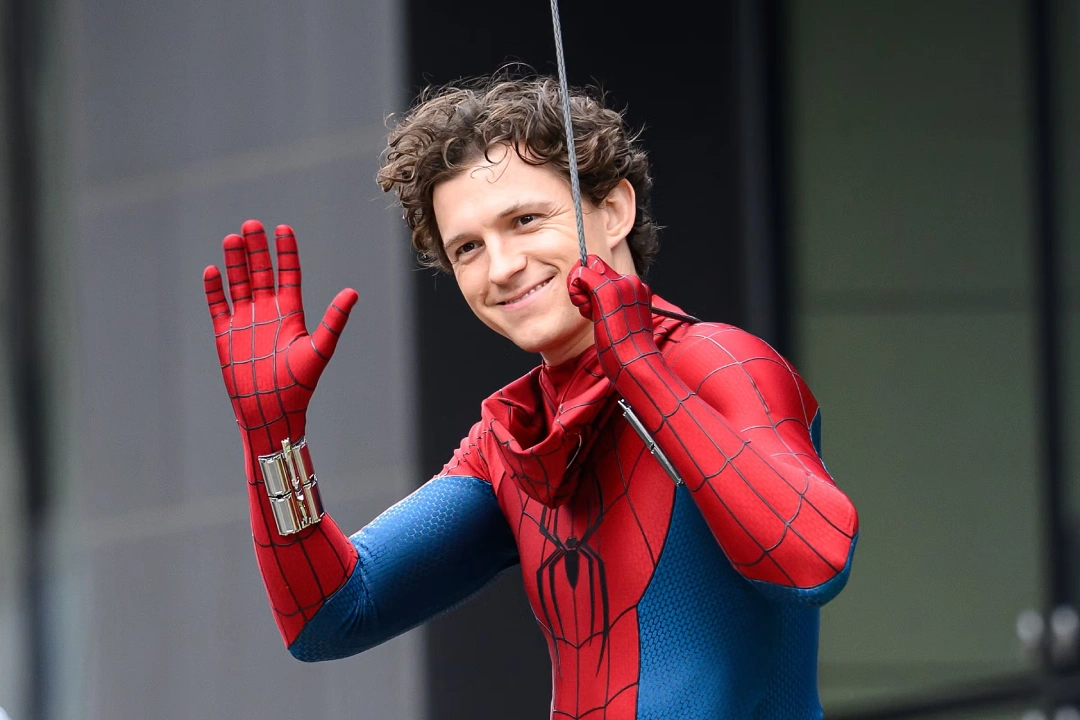
The red and blue Spider-Man suit turned the young British actor into an international name, putting him right at the centre of one of cinema’s biggest franchises. Still, Holland’s story didn’t start in Hollywood, or with visual effects, or with pure superhero spectacle. Long before people started calling him Peter Parker, he was already a developing performer, sharpening his skills on the stages around London.
That beginning still remains kind of important for understanding Holland today. His career is increasingly becoming a story not just about chasing acclaim, but about what an actor does after he has become fully glued to, one of popular culture’s most famous figures.
From Kingston to the West End
Born in Kingston upon Thames in 1996, Holland grew up far away from the gears and machinery of Hollywood. His breakthrough arrived through dance and stage work. He joined Billy Elliot the Musical in London’s West End and soon took on the demanding lead role.
The production needed much more than plain acting. Billy is a character whose arc leans heavily on movement, emotional openness, and physical discipline. Holland’s years of dance schooling gave him a groundwork that would later turn out to be unexpectedly useful when Hollywood finally came calling.
His shift into film, pretty quickly showed that he had more than athletic talent.
In 2012, Holland made his first feature film debut, as Lucas in J. A. Bayona’s The Impossible, the drama drawn from the devastating 2004 Indian Ocean tsunami. His turn as a child trapped within this massive human catastrophe brought a lot of attention, and then a string of breakthrough honours arrived. Later on, BAFTA put Holland on its Breakthrough Brits list, and in 2017 the British public voted him as the winner of the EE Rising Star Award.
The trajectory was getting clearer, like almost inevitable. A boy who had learned to direct a West End stage was now turning into one of Britain’s most promising young screen actors.
Then Spider-Man happened.
Becoming Peter Parker
Holland first showed up as Peter Parker in 2016’s Captain America: Civil War. His take on the character read as intentionally young: eager, a bit unsure, and still genuinely amazed by the strange world he had been dropped into.
It landed well, and Spider-Man: Homecoming arrived in 2017 after that.
The role quickly elevated Holland from a rising actor to a global celebrity. He would come back as Spider-Man across Marvel films including Avengers: Infinity War, Avengers: Endgame, Spider-Man: Far From Home and the enormous crossover event Spider-Man: No Way Home.
Still, playing a globally recognised superhero gives a peculiar career challenge. Success can open doors, while at the same time narrowing the public’s view of an actor.
Holland has spent these years proving that the mask does not have to become the whole of his profession.
His work beyond Marvel has included The Devil All the Time, Cherry, Uncharted and the television drama The Crowded Room. Not every release landed in the same way, but together they show an actor willing to swap between accessible entertainment and psychologically demanding material, instead of repeating only the formula that made him famous.
Back to Where It Began
Maybe one of the more telling choices in Holland’s post-Spider-Man path showed up when he went back to the West End.
In 2024, he played Romeo opposite Francesca Amewudah-Rivers in Jamie Lloyd’s version of Romeo & Juliet at the Duke of York’s Theatre.
For someone linked worldwide with huge film projects, stepping back into Shakespeare carried a certain symbolism. Theatre wasn’t a fresh novelty for Holland; it was basically where his working life first started.
And the show became one of London theatre’s hottest tickets, showing the real reach Holland could pull from cinema into the West End. Also, it gave the kind of thing that computer-generated spectacle cannot, that raw vulnerability of doing it live, in real time.
This eagerness to return to the stage pointed to an actor focused on keeping the basics of his craft intact even as the spotlight kept growing.
Tom Holland, Entrepreneur
Holland’s ambitions have also started to move outside acting.
In 2024, he helped co-found BERO, a premium non-alcoholic beer company, which came to life after he made his own decision to stop drinking alcohol. Instead of putting his name on some unrelated celebrity product, Holland has tied the business directly to the shifts in his daily routine.
Since then, the company has moved into wider offerings and distribution. In 2025, BERO announced a three-year partnership with the British luxury car maker Aston Martin, and then in 2026 the brand rolled out a range of non-alcoholic shandies.
This also shows another layer of Holland’s public persona: actor, producer, brand founder, and entrepreneur, all in the same breath.
More than anything, it points to a bigger change happening among today’s celebrities. Fame is getting converted into ownership. The most prominent actors are no longer only ambassadors brought in to advertise someone else’s company; many are trying to build ventures that can keep going after their own spotlight eventually fades.
Holland seems aware of that distinction. His current problem now is to turn BERO from a celebrity-backed launching pad into a steady consumer brand, you know, the kind people keep choosing.
A New Chapter
At 30, Holland is in a especially meaningful point of his career.
He is not the teenager anymore who was rolled out to audiences as Hollywood’s newest Spider-Man. He is a well-known international star now, and he has to decide what the next ten years of his working life should actually be like.
Also, Spider-Man still sits inside that plan.
Holland came back as Peter Parker in Spider-Man: Brand New Day, directed by Destin Daniel Cretton, and it reached theaters on 31 July 2026. The movie places Peter in a more isolated version of adulthood, four years after No Way Home.
That forward movement feels right.
Holland and Peter Parker have in some ways grown up together out in the open. The young actor who first stepped into the role has pulled in the usual mix of wins pressures and obligations that come with international fame, meanwhile the fictional character has moved past adolescence into something more complicated, less straightforward adult.
Still the most curious question around Holland might not even be how much longer he stays Spider-Man.
It’s what he will build alongside, and later past, that role.
From Billy Elliot to Shakespeare, independent dramas to billion dollar franchises, and now from acting into entrepreneurship, Holland’s career has stretched wider than the superhero identity that put him on the global map.
The Spider-Man suit might have helped Tom Holland become one of the world’s most recognisable British actors. But what he does after it, could end up shaping the legacy of his work.