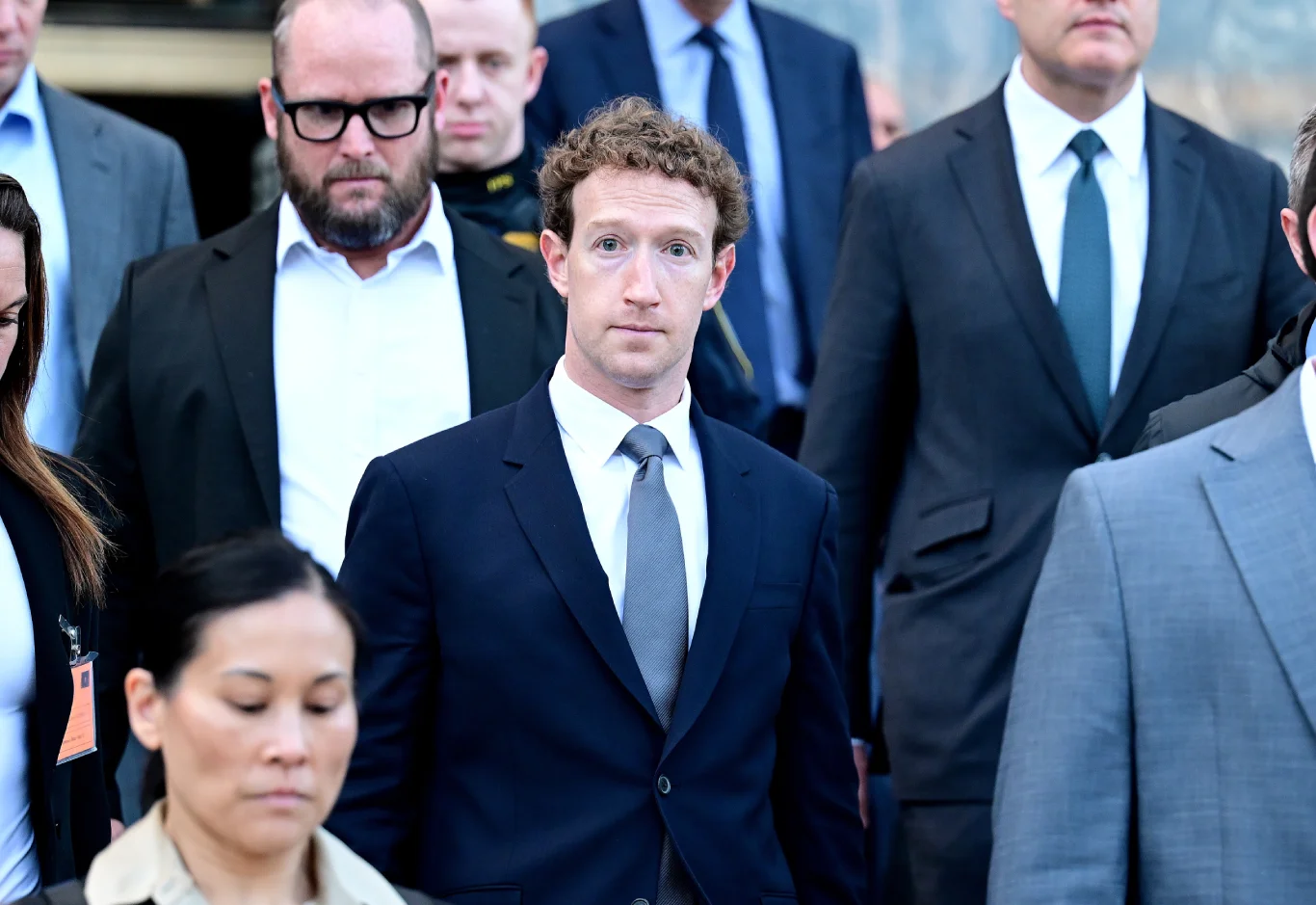
For his part, it was not ‘just another day at the tech office’ for Mark Zuckerberg this week. It was a cultural moment where a billionaire founder went to bat for the architecture of the modern gaze.
At the epicenter of the case is the parent company of Facebook and Instagram, Meta Platforms, which allegedly designs its platforms to ensure that more engagement is secured at the cost of mental health for the users- principally teenagers. The trial, billed as landmark, has brought in from the public a statement on one company’s designer choices, into a broader loftier engagement on the social contract between the Silicon Valley and the lay public.
One could sense, casually, that the Earth moved inside this courtroom—far from what you would find in a corporate lawsuit, but more like the grave act of public reconsideration. This session’s attorneys argue that it is the plaintiffs’ case that Meta’s products are engineered to be habit-forming, and that they deploy algorithmic feeds, push notifications, and rewards that keep their end-users scrolling down well beyond reason. The defense, on the other hand, says that the so-called platforms are nothing more than tools, albeit quite powerful tools, which are, at the end of the day, shaped by user choice and market demand.
The core of Zuckerberg’s testimony, once again, hinged on the theme of innovation over exploitation. Zuckerberg talked through how Meta continuously responds with consumers their constant iteration of products is meant to overcome barriers to connectivity and user experience: the platforms matched—and adapted—to what the internet itself became. This in turn matched gadgets, mobile applications, and faster internets and kept with changed expectations of information age communication.
Yet, the narrative of the plaintiffs opens up another possible perspective to it. They argue in terms of the reliance on internal documents, design memos, and testimony from previous employees that suggest that engagement metrics regularly overshadowed safety concerns. The suits are not just about proving damages, but also foreseeability-did the executives know the damaging potential of certain features on addictive behavior, especially among teenagers.
To many, this trial is emblematic of a generational shift. It underscores that social media is not a novelty anymore; it is an infrastructure. Teenagers go out there building their own identities and communicating with their families. News has its shape due to it. An increasing number of legislators and parents are beginning to have questions about whether or not the design of the platforms aligns with the best interests of the user in the long run.
All the above are designed to protect Zuckerberg, who claimed that there was considerable expenditure on safety tools such as parental controls, content moderation systems, and time-management features. Furthermore, according to him, the issues extend across the industry: misleading posts, concerning content, and moderating billions of posts in every language and culture. Zuckerberg held that no single tech company could deliver a fix for such problems, as much as they are inherent in the architecture of the Internet.
Claims of the plaintiffs have been made that size does not absolve companies of responsibility. When a platform becomes a primary social environment for young users, they argue, design choices carry ethical weight. The plaintiffs argue that features like infinite scroll and algorithmically curated feeds are not neutral; they are structural incentives shaping behavior.
It dramatizes a tug-of-war between innovation and regulation. Technology companies for ages had largely functioned in a relatively permissive modality, where self-regulation and market forces had been accepted norms; that is, until an activist regulatory body began casting its authoritative spells over a search for more control, questioning how data is collectively bought, how content is affected, and how user engagement is serviced.
In testimony, Mr. Zuckerberg marked Meta in the changing regulatory landscape. In admitting previous mistakes; he emphasized that he had made improvements. The business had put in new protections and worked with outside researchers in understanding patterns of youth engagement.
Critics maintain that incremental updates fail to address deep-rooted design flaws. They insist that an economic infrastructure hinged on capturing as much user time on a platform will support safety initiatives. The discussion of how to balance reward strategies for attention capture towards the safety of the minority is a sensitive topic and underpins some of the quieter courtroom debates.
Beyond the courthouse, responses have remained polarized. For proponents of the lawsuit, it is all about delayed accountability, perhaps setting a critical precedence, thereby influencing an unstoppable shift in product design concerning children as practiced by technology companies. Industry stakeholders, on the other hand, caution about unintended consequences: fear as well as threat of innovation stifled by litigation, or platforms obviously overly cautious that may have overly limited free expression…
On the other hand, the young clients are very much likely to offer social media for community, creativity, and even the economic opportunity-so much that it is felt by large numbers of them as a crushing decision against the largest global-contributing platform. The content creators, boutique entrepreneurs, and marginalized communities have, on the merchandise sold through Meta’s involved platforms, captured distinct groups within their fold; however, there is a majority of them while they could not have represented this snapshot in the history of a lifetime without Facebook that soon turned the dice over for the significant few.
The exchanges in the courtroom, sometimes, were matters of algorithms and formulas-the rank of the same, engagement metrics, and product cycles-while exchange concerning the human existence down the line rests on the shoulders of the jury: did decisions design tap corporate executives’ thoughtlessly create generation-above-named features of anxiety, addiction-like behavior, and negative well-being in youngsters?
Zuckerberg is clutching to the claim that it is the users who choose to do virtually everything they do: sign in, follow, socially network, etc. Opposition remains holding onto the thought that when platforms have been engineered to maximize engagement, choice, in essence, often becomes a product of design. This philosophical credo, liberty versus systems of architecture – pitchforks energy within the intense frames of the lawsuit.
Presuming the court does not toss out the case for insufficient proof in the meantime, upon reaching a decision, Meta will be held culpable only by suggestion possessing the intellectualist and factual challenges that intend to bring this action to closure: did Meta knowingly prioritize engagement, to the exclusion of human suffering; or was in fact Meta just in following the dictates of industry across regulation, customer demand, and pressure to act within limits led already well outside those that govern usership by the Internet and social media companies? Nevertheless, the inclusion of the issue of two individual cases to supplement hints and insinuations from a much broader context. That the same question flutters around regular events and heaps of speculation regularly shifting the bough perpendicularly in turbulence.
The courtroom trial is more than just about Zuckerberg; it is about a trial for both him personally and for Meta as a corporate entity. Gates’ position is one of historicity. His position has been to mold Facebook from a dorm room operation to a gigantic infrastructure provider. His contribution to the coroner and evidence process offers much on the mantle; Meta is forever mixed with stories broadcasted in social media.
Regardless of who wins or loses the case, the trial is creating a new horizon that eliminates the significance of details concerning the newest updates or feeds, except accountability in the online era. The seeming sea of differing ideas about the consequences of the trial needs to remember one reality; it is ultimately the future of millions of people they are structing into thought, relationships, and growth.
The more crucial question is this: will law remold how such platforms are constructed, or will the industry decide on where its boundaries end until another definitive legal intervention?