The joint U.S.–Israeli military campaign against Iran, launched in late February 2026 and described by Israel as “Operation Lion’s Roar”– has targeted a wide array of Iranian military, political, and strategic infrastructure. The operation aims to weaken Iran’s ability to launch missiles, command regional proxy groups, and potentially develop nuclear weapons.
In just the first days of the campaign, officials said more than 1,200 targets were struck, and the number has continued rising as the conflict expanded.
Below is a breakdown of the main types of sites and locations hit so far.
1. Iranian Leadership and Government Sites
One of the most sensitive early strikes targeted the Pasteur Street district in Tehran, where key Iranian leadership facilities are located. This area includes residences used by senior leaders as well as government offices tied to national security.
The strike reportedly hit compounds connected to Iran’s ruling leadership structure, including areas associated with the country’s top political figures and national security institutions.
Such attacks appear designed to disrupt command structures and decision-making, rather than just physical military assets.
2. Missile Launch Sites and Ballistic Missile Infrastructure
A major focus of the campaign has been Iran’s extensive missile network.
Israeli and U.S. officials say hundreds of ballistic missile launchers and related infrastructure have been destroyed or disabled across western and central Iran.
These strikes targeted:
- Mobile missile launch platforms
- Underground missile storage facilities
- Missile production and maintenance sites
- Launch preparation areas
Cities and regions where missile-related sites have reportedly been struck include:
- Kermanshah
- Qom
- Tabriz
- Karaj
- Ilam
- Lorestan province
- Zanjan
- Urmia
- Shiraz
- Bushehr
These areas host key elements of Iran’s ballistic missile program, which Israel has long viewed as a major threat.
3. Air Defense Systems
Before and during the main wave of strikes, aircraft and missiles targeted Iran’s air defense network.
Destroying radar installations, surface-to-air missile batteries, and command nodes helps clear the airspace for follow-on attacks.
Israeli officials said roughly 200 aircraft participated in large strike waves, hitting air defenses and other strategic sites.
4. Nuclear-Linked Facilities
Another priority has been locations connected to Iran’s nuclear program.
Among the most notable targets is the Natanz nuclear enrichment facility, one of the country’s most important uranium-processing sites. Satellite images confirmed fresh damage to entrances and above-ground structures during the 2026 strikes.
Although the underground enrichment halls reportedly remained intact, damage to entrances and infrastructure made parts of the complex inaccessible.
Other nuclear-related areas around Isfahan, which hosts research and industrial facilities tied to Iran’s nuclear and missile programs, have also been targeted in earlier phases of the conflict.
5. Military Bases and Command Centers
U.S. and Israeli forces have also hit:
- Iranian military bases
- Command-and-control facilities
- Intelligence infrastructure
- Training sites for Iran’s armed forces
Many of these locations are linked to the Islamic Revolutionary Guard Corps (IRGC), Iran’s powerful military organization responsible for missile forces and regional proxy groups.
Officials say dismantling these structures is key to weakening Iran’s ability to coordinate attacks abroad.
6. Cyber and Communications Infrastructure
Beyond physical strikes, the campaign has included cyber operations targeting Iran’s digital networks.
Reports indicate cyberattacks disrupted government communications and caused a massive internet outage across Iran for more than two days.
One widely used Iranian mobile app was reportedly hacked to broadcast messages encouraging soldiers and civilians to oppose the government.
7. Urban Targets and Infrastructure
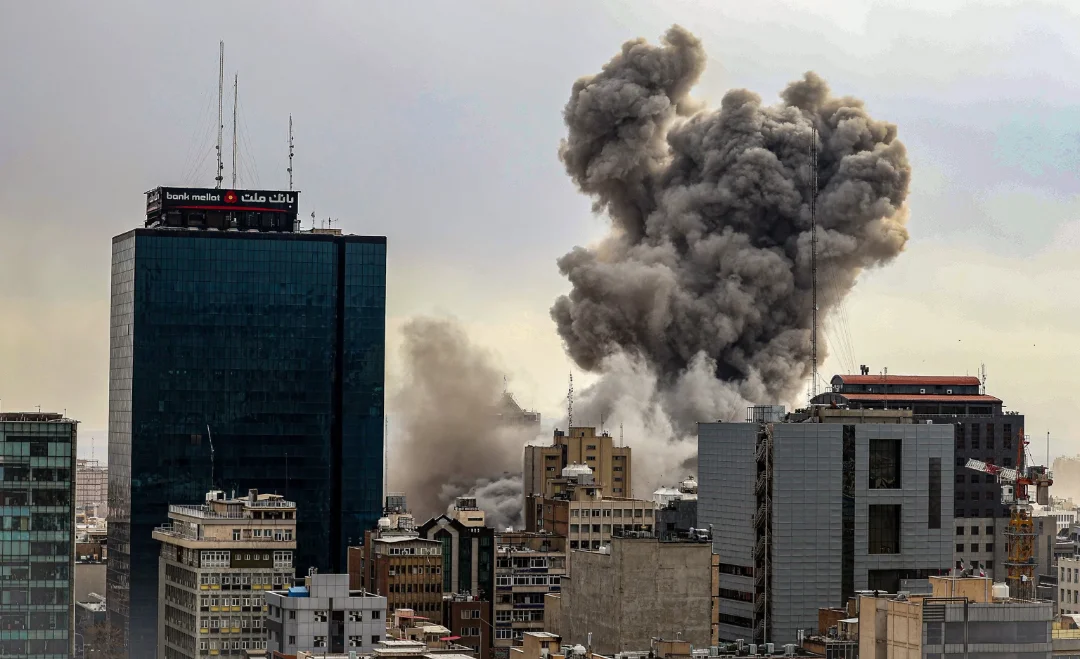
Explosions have also been reported in major Iranian cities, including Tehran and other population centers.
In some cases, strikes damaged:
- Police facilities
- infrastructure tied to security forces
- transportation hubs
Iranian authorities have also reported damage to civilian infrastructure such as hospitals and medical facilities, though the circumstances and targeting remain disputed.
The Scale of the Operation
The scope of the campaign is enormous. Some reports say thousands of targets have already been hit as the operation expands.
Military analysts describe the campaign as one of the largest coordinated air offensives in the Middle East in decades, combining:
- Israeli fighter jet strikes
- U.S. cruise missile attacks
- drones
- cyber warfare operations
What Comes Next
Officials in Washington and Jerusalem say the operation could last several weeks, depending on how quickly Iran’s military capabilities are degraded.
Iran has already responded with missile and drone attacks on Israel and U.S. bases across the Middle East, raising fears that the conflict could expand into a broader regional war.