
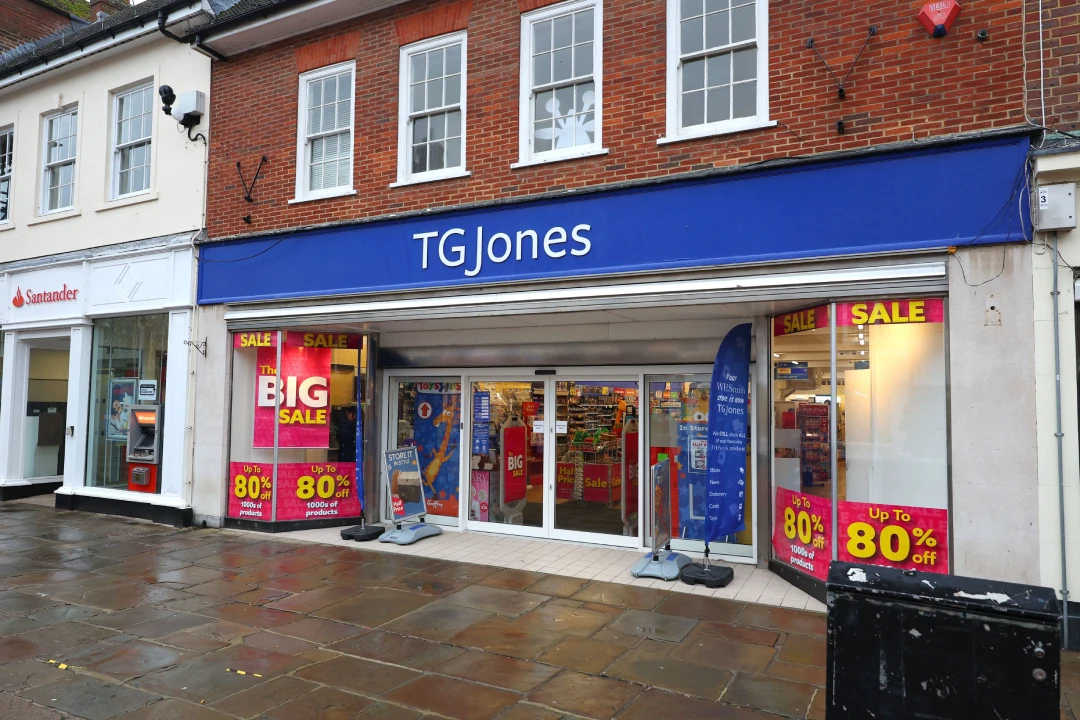
A historic British retailer faces another uncertain chapter as its private equity owner explores a potential sale following a major restructuring.
For more than two centuries, WH Smith has been a familiar presence on Britain’s high streets, serving generations of customers looking for books, newspapers, stationery, magazines, and everyday essentials. Its shops became part of the country’s retail landscape, offering a sense of familiarity that survived changing shopping habits and generations of technological progress.
Today, that legacy is facing another significant turning point.
TG Jones, the rebranded high-street business formerly operated by WH Smith, has been put up for sale less than 18 months after changing ownership. Its current owner, private equity firm Modella Capital, has appointed financial advisers to explore potential offers following unsolicited expressions of interest from prospective buyers.
The development comes after a difficult period for the retailer, which has already undergone a substantial restructuring programme involving approximately 150 store closures.
From WH Smith to TG Jones
The story of TG Jones began with one of Britain’s oldest retail names.
WH Smith was established in 1792 by Henry Walton Smith and his wife Anna, initially operating as a news distribution business before developing into a nationwide retailer. Over more than 230 years, the company expanded its presence across the United Kingdom, becoming particularly recognizable for its high-street stores.
However, changing consumer habits, growing online competition, and increasing operating costs placed pressure on its traditional retail operations.
In June 2025, WH Smith sold its high-street business to Modella Capital, allowing the publicly listed company to concentrate on its more profitable travel retail operations, including shops in airports and railway stations.
The high-street stores subsequently adopted the TG Jones name, marking the end of an era for the familiar WH Smith branding in traditional shopping districts.
The separation meant that WH Smith retained its travel locations, website, and rights to the WH Smith name, while the former high-street business began operating under its new identity.
A Difficult Restructuring
The transition to TG Jones did not immediately produce the improvements its new owners had hoped for.
Modella Capital described the retailer as a loss-making business with an uncertain future when it acquired the chain. Trading difficulties and financial pressures eventually led to a restructuring programme designed to reduce costs and preserve the remaining business.
In July 2026, the High Court approved a restructuring plan that allowed TG Jones to close up to 150 of its approximately 480 stores. The plan also involved changes to rental obligations and other financial commitments.
The closures significantly reduced the retailer’s physical footprint, leaving approximately 350 stores operating across the business.
Although the restructuring involved difficult decisions affecting employees, landlords, and local communities, Modella maintained that the measures were necessary to prevent the company from entering administration.
The business currently employs approximately 3,500 people, making its future an important concern for thousands of workers and their families.
Potential Buyers Show Interest
Despite the challenges, TG Jones is now attracting attention from prospective buyers.
Modella Capital and TG Jones have jointly appointed Teneo Corporate Finance to review unsolicited offers and conduct a market-testing exercise to determine potential interest in the business.
An auction process is expected to take place, although a completed transaction is not anticipated before the first quarter of 2027.
The timing is intended to avoid disrupting trading during the crucial Christmas shopping period, traditionally one of the most important times of the year for retailers.
TG Jones chief executive Alex Willson has maintained that the company is continuing its turnaround strategy and that its performance is improving month by month.
Modella managing director Joe Price has also defended the restructuring, emphasizing that difficult decisions were necessary to stabilize the business and establish a more sustainable operation.
The company has indicated that trading results are beginning to improve, with reports suggesting that previously declining like-for-like sales have moderated.
However, whether these improvements will be sufficient to attract a buyer willing to invest in the retailer’s long-term future remains to be seen.
A Wider Challenge for Britain’s High Streets
TG Jones is not alone in facing the pressures affecting traditional British retailers.
High-street businesses across the country continue to navigate rising operating expenses, changing shopping preferences, competition from online marketplaces, and cautious consumer spending.
For many established retailers, maintaining large networks of physical stores has become increasingly difficult as customers move toward digital shopping and alternative retail experiences.
The potential sale also comes amid uncertainty surrounding other British retail businesses, including discount retailer Poundland, which has been seeking a buyer while facing its own financial difficulties.
These developments highlight the challenges facing retailers attempting to preserve established brands while adapting to a rapidly changing commercial environment.
Preserving a Retail Legacy
For customers who grew up visiting WH Smith, the transformation into TG Jones represents more than a change in signage. It reflects the wider evolution of Britain’s shopping streets and the difficulties faced by businesses with long histories and deeply established identities.
The proposed sale could introduce another ownership change, potentially bringing new investment, strategic direction, or further restructuring.
For employees, the immediate concern remains the stability of their jobs. For customers and communities, the future of the remaining stores will determine whether a familiar retail presence continues to occupy Britain’s high streets.
After more than two centuries of history, the business that began as a modest news distribution operation is once again at a crossroads.
Whether TG Jones can establish a sustainable future under new ownership will depend on its ability to adapt to modern retail demands while preserving the customer relationships that helped make its predecessor a household name.