
Dinosaurs have fascinated the public for generations. Their enormous skeletons, extraordinary features, and mysterious disappearance have made them some of the most recognizable creatures in Earth’s history. From museum exhibitions to blockbuster films, prehistoric giants continue to capture the imagination of millions.
But in the world of scientific publishing, that popularity may come with an unexpected consequence. A new analysis suggests that dinosaurs and other visually appealing prehistoric animals are receiving considerably more attention in prestigious scientific journals than less celebrated fossil species, raising questions about how scientific discoveries are selected, presented, and valued.
The findings, reported by Nature on October 30, 2026, provide statistical support for a concern that palaeontologists have discussed for years: some fossils appear to have a much easier path into the industry’s most influential publications simply because they attract greater public interest.
When Popularity Meets Scientific Publishing
The analysis was conducted by Bryan Gee, a palaeontological researcher at the Burke Museum of Natural History and Culture in Seattle. His investigation examined more than 4,200 research papers published since 2000, documenting 8,331 newly described extinct species across 13 scientific journals.
The publications included prestigious titles such as Nature and Science, alongside specialist journals dedicated to palaeontology and fossil research.
The results revealed a substantial difference in the kinds of discoveries appearing in these publications.
More than half of the fossil species described in Nature and Science belonged to two major evolutionary groups: Avemetatarsalia, which includes dinosaurs and birds, and mammaliamorphs, which include mammals and their close relatives.
In comparison, these groups accounted for only approximately 15 percent of newly described species in the specialist journals examined. Invertebrates, including molluscs and arthropods, represented more than half of the discoveries featured in some of those publications.
The difference suggests that the most prestigious scientific platforms may not reflect the full diversity of discoveries taking place in palaeontology.
The Appeal of a Dinosaur Discovery
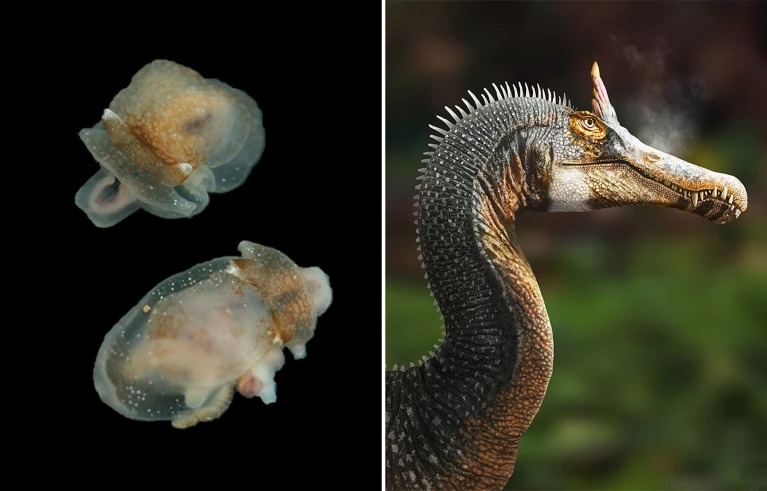
The research was partly inspired by the public reaction to a February 2026 study published in Science describing a new species of Spinosaurus. The giant, fish-eating dinosaur was distinguished by an unusual scimitar-shaped crest that quickly attracted widespread media attention.
The discovery generated hundreds of news articles and thousands of social media posts, demonstrating the extraordinary ability of dinosaur research to capture public attention.
For researchers working with less recognizable fossil groups, however, that level of visibility can be difficult to achieve.
Dinosaurs possess an established cultural appeal. Their size, appearance, and place in popular imagination make them relatively easy to communicate to general audiences. A newly identified dinosaur can become an international headline, while an equally important discovery involving an ancient mollusc or arthropod may receive considerably less attention.
This difference matters because prestigious publications can influence professional opportunities, institutional recognition, research funding, and academic careers.
Gee argues that an environment favoring spectacular discoveries could encourage younger researchers to prioritize charismatic fossil species over less celebrated areas of study.
What Happens to the Overlooked Species?
The debate extends beyond publication statistics. If certain fossil groups consistently receive greater visibility, researchers worry that scientific attention and resources could become concentrated around a narrower portion of the prehistoric record.
Less-publicized species can provide essential information about ancient ecosystems, evolutionary relationships, environmental changes, and the development of biodiversity.
Molluscs, insects, marine invertebrates, and other smaller organisms may not command the same public fascination as a Tyrannosaurus rex, but their fossils can reveal important details about how ancient environments functioned.
A broader understanding of prehistoric life depends on studying these organisms alongside the larger animals that dominate museum displays and popular documentaries.
There are also concerns about the incentives created by competition for high-profile publications. Previous research has argued that the pressure to produce spectacular discoveries can encourage researchers to prioritize attention-grabbing specimens, sometimes at the expense of questions surrounding fossil ownership, legal collection, provenance, and accessibility to other scientists.
A Debate About Editorial Priorities
The findings have generated mixed reactions within the scientific community.
Some researchers view the analysis as confirmation of a longstanding imbalance. Others argue that the results do not necessarily demonstrate deliberate favoritism by journal editors.
Nature representatives have emphasized that editorial decisions are based on the quality and significance of submitted research, following peer review. The publications featured in major journals may reflect both the types of studies researchers submit and the judgments made by editors and reviewers.
It is also important to recognize that Gee’s analysis was released as a preprint and had not yet undergone peer review at the time of the report. Its findings therefore offer an important starting point for discussion rather than a final verdict on scientific publishing practices.
Nevertheless, the numbers provide an opportunity to examine a question that reaches beyond palaeontology: How much should public appeal influence which scientific discoveries receive the greatest visibility?
Looking Beyond the Famous Fossils
Dinosaurs will undoubtedly remain among the most celebrated discoveries in natural history. Their scientific importance is undeniable, and their popularity can help introduce new generations to evolution, geology, and the history of life on Earth.
But scientific discovery is far larger than the animals that dominate museum halls.
Every fossil, whether it belongs to a massive prehistoric predator or a tiny marine organism, contributes another piece to understanding Earth’s complex biological history.
The challenge for scientific publishing is finding ways to recognize discoveries for their research value without allowing popularity to become an unintended measure of importance.
Ultimately, the debate is not about giving dinosaurs less attention. It is about ensuring that other remarkable discoveries are not left in their shadows.
After all, the history of life on Earth was never written by dinosaurs alone.