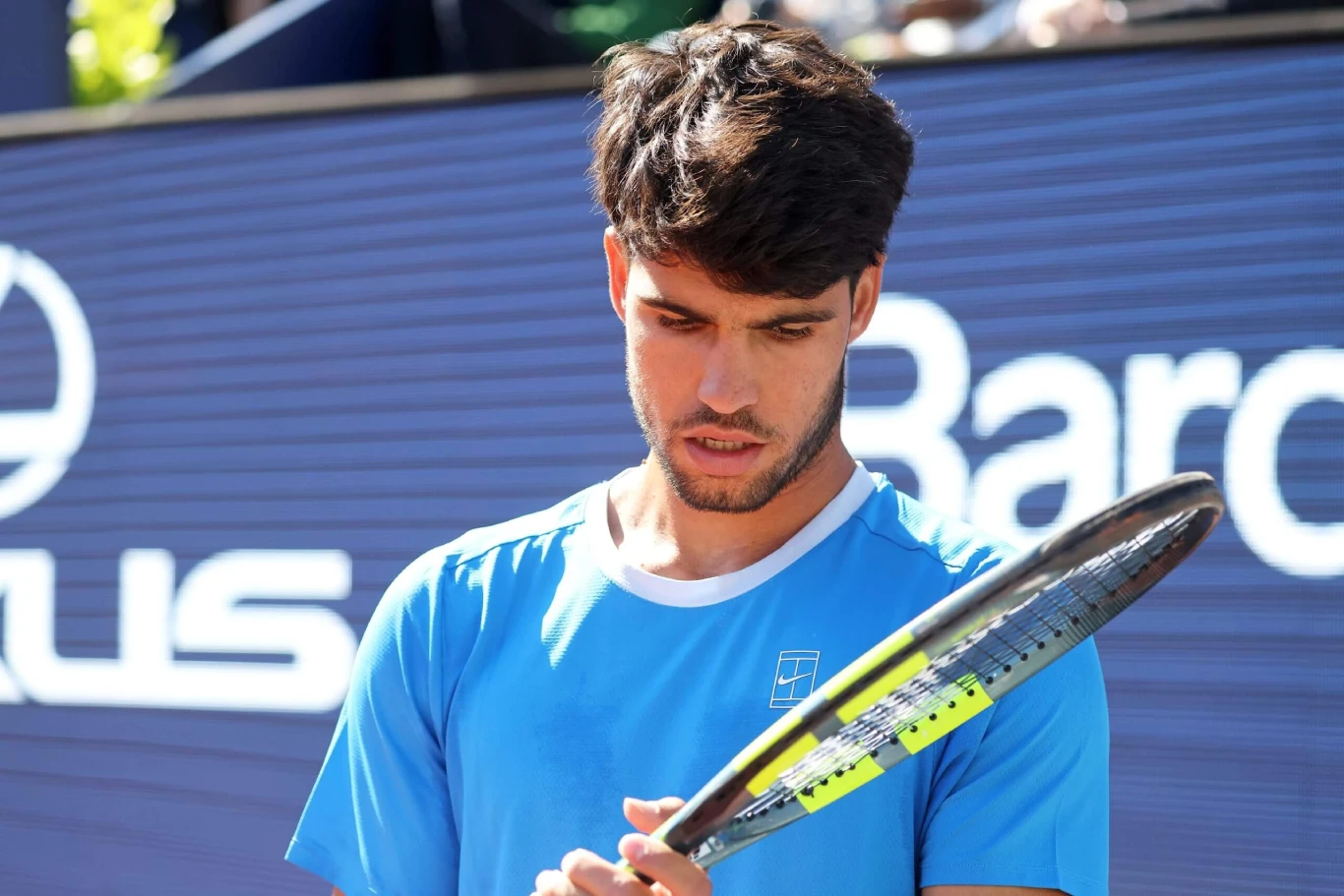
Barcelona – In a sudden and emotionally charged turn on the European clay circuit, Carlos Alcaraz has withdrawn from the Barcelona Open after suffering a right wrist injury, raising fresh concerns about his physical condition during one of the most demanding stretches of the tennis calendar.
The world No. 2 and home favourite had entered the tournament as the top seed and clear headline attraction, with expectations that another deep run in Barcelona could propel him back toward the world No. 1 ranking. Instead, his campaign ended abruptly after medical evaluations confirmed that the injury was more serious than initially feared, forcing him to retire before his second-round match.
Alcaraz sustained the issue during his opening match against Finland’s Otto Virtanen, where he required treatment on his wrist after experiencing sharp discomfort while striking forehands. Though he managed to complete a straight-sets victory, the warning signs were already visible. By the following day, after skipping practice and undergoing further assessment, the decision was made: no continuation, no risk.
“It’s a more serious injury than we all expected,” Alcaraz said in comments confirming his withdrawal, emphasizing the need to prioritize long-term health over short-term competition.
For Barcelona spectators, the announcement carried a familiar sense of disappointment. The tournament at the Real Club de Tenis Barcelona has long been a showcase event for Spanish tennis pride, and Alcaraz’s presence typically transforms it into a national celebration. His withdrawal not only reshapes the draw but also removes the tournament’s biggest drawcard at a crucial stage.
A Brutal Calendar Takes Its Toll
Alcaraz’s withdrawal has reignited discussion around the punishing structure of the ATP clay season. Coming off a deep run to the Monte Carlo Masters final, he had played multiple high-intensity matches in rapid succession before arriving in Barcelona. The physical load, combined with the explosive, high-spin style that defines his game, appears to have contributed to the strain on his wrist.
Analysts and former players have increasingly pointed to the compressed clay swing as a period where even elite athletes struggle to maintain peak physical resilience. Barcelona, positioned between Monte Carlo and the upcoming Madrid and Rome Masters, often becomes a strategic crossroads: compete through fatigue or risk falling behind in ranking points.
In Alcaraz’s case, he chose caution – but not before his body forced the decision.
Ranking Implications and Ripple Effects
The timing of the injury carries broader consequences beyond the tournament itself. Alcaraz had been in contention to challenge for the world No. 1 ranking during the clay swing, but his withdrawal effectively ends that immediate ambition. With rival Jannik Sinner maintaining momentum elsewhere, the rankings race tilts further away from the Spaniard for now.
The Barcelona Open draw also undergoes a significant shift. With the top seed removed, the pathway opens for other contenders to seize a rare opportunity in one of the ATP 500’s most prestigious clay events. Players such as Lorenzo Musetti, Andrey Rublev, and Alex de Minaur now find themselves with a clearer route to the final stages.
A Familiar Warning Sign
This is not the first time Barcelona has delivered a physical warning to Alcaraz. In previous seasons, deep runs on clay have come at a cost, with fatigue and minor injuries occasionally disrupting his momentum heading into Madrid or Roland Garros. The latest setback adds to growing scrutiny over how his aggressive, all-court style might be managed across the long season.
Despite the concern, there is cautious optimism within his team that the injury is manageable. Early indications suggest rest and recovery could allow a return in time for the Madrid Open, though no timeline has been confirmed.
Looking Ahead to Madrid and Paris
For now, Alcaraz returns home to begin treatment and recovery with his medical staff. The immediate focus is preservation rather than progression, ensuring that a short-term injury does not evolve into a long-term problem.
With the French Open looming at the end of May, the stakes remain high. Roland Garros is widely considered one of Alcaraz’s strongest hunting grounds, and any compromise in preparation would be significant.
Still, in Barcelona, the message is clear: even the brightest young star in tennis is not immune to the physical demands of the tour. And in a sport defined by margins, sometimes the most important match is the one a player chooses not to finish.