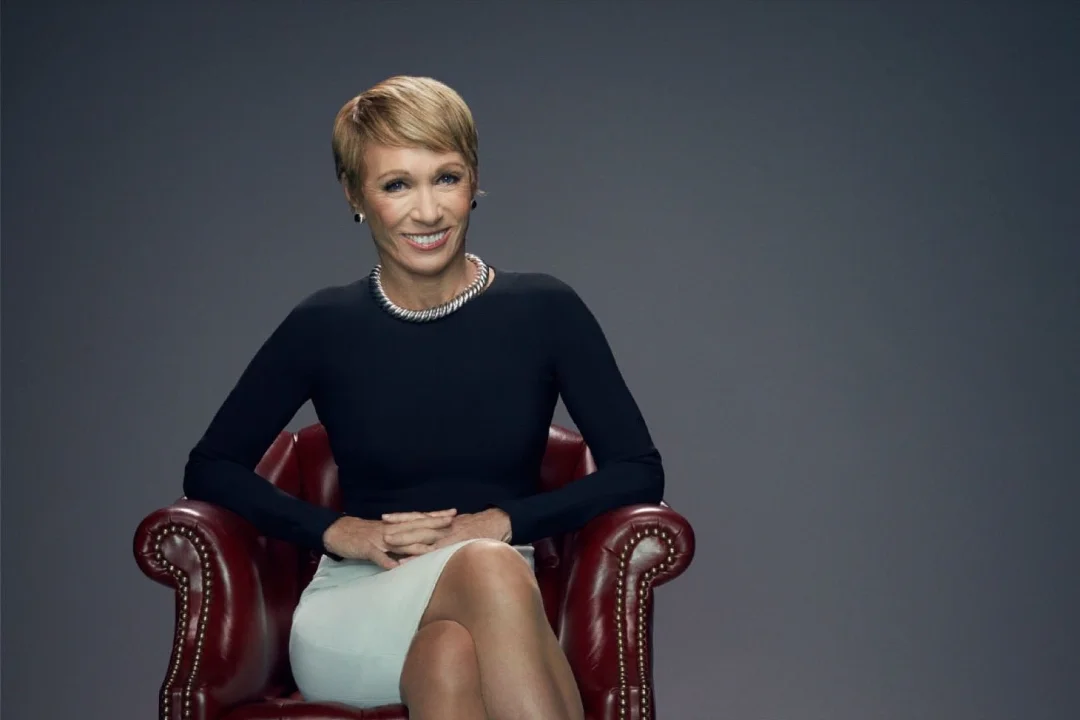
Barbara Corcoran started from a humble beginning. She managed to amass a mountain of real estate from a single $1,000 loan she took.
One likes to sigh and begin with the rags-to-riches hustle, and much like a fairy tale, this is seen in the wonders of Ms. Corcoran’s rags-to-riches story. A majorly influential real estate tycoon in the Big Apple, she would begin a small enterprise of brokerage.
Long before Shark Tank began, Barbara Corcoran was just one out of ten children of a working-class family in New Jersey. Her father had difficulties holding a steady job. There was seldom any money. She often talks about her childhood home as chaotic but full of life; it was a place where creativity and humor had to be a survival tool. As she describes them, poor circumstances were turning points in her life.
As she talks about it through the years, she says, numerous times, that poverty turned out to be her leading life’s tutor.
“Early on, I learned that if you want something, you have to figure out how to get it for yourself,” she said in interviews reflecting back on those years.
Corcoran had a tricky path to success in business. She had a hard time in school with dyslexia and ended up placing poorly academically, frequently being cast as the least likely to succeed.
After graduating from college, she floated through various jobs: waitressing, retail sales, and even teaching, before she stumbled upon the industry that would later dominate her career: real estate.
In fact, it was just by accident that she ended up in the business in the first place.
Corcoran borrowed $1,000 from her then-boyfriend to start a real estate business in New York City in the early 1970s. Together they formed a partnership, operating from a small office under the name Corcran-Simone, that focused on apartment sales in Manhattan.
The partnership abruptly ended with a personal breakup. Corcoran was beginning again, but she didn’t walk away.
She would later do yet another renaming, which would give birth to what is, today, among the most recognizable real estate brands in New York.
The Real Estate Marketing Reset
New York’s real estate industry totally changed over these decades; by the 1970s, established multibillion-dollar behemoths roamed the streets, each brand holding a cargo of all major institutional investors in the world. In that landscape, Corcoran’s small young brokerage had little in its arsenal.
There was, however, creativity.
A blank canvas on which to experiment, the Corcoran office offered opportunity for all sorts of unique experiments. This small real estate company started publishing detailed reports on neighborhoods, housing prices, and buyer behavior, where tables, graphs, and pie charts were reluctantly replaced with compelling stories drafted from real market data.
Articles in these reports went far in exciting the media interest in such backhand data analysis, and Corcoran’s firm, in the eyes of the world, became an authority in the field.
Corcoran’s understanding of the emotional side of real estate must not be underestimated. Buying a home is not just about money spent; our city’s homes are intricately tied to identity, aspiration, and lifestyle.
Corcoran has trained her agents to tell clients that, besides the square footage, is the story. Indeed, the apartment moments were just the tip of the iceberg.
It worked.
Throughout the ’80s and ’90s, The Corcoran Group quickly acquired the area’s most important residential real estate companies. Their agents came to represent luxury properties for equally affluent clients who were now entering ambitious development.
By the early 2000s, the company had grown nicely into a business that employed scores of agents and brokered billions of dollars of property sales.
Strategy for a Successful Exit
In 2001, she surprised the real estate community by doing something that really made sense: selling The Corcoran Group to NRT Incorporated, a national real estate brokerage network.
This endeavor valued the company at about $66 million, according to feedback.
Now Corcoran saw a new chapter opening even as she closed the old one.
After decades of pitching tents in a real estate empire, now she is free to explore the world of writing, speaking, investing, and eventually, TV programming.
Television Mogul
The next phase of Corcoran’s life began with her joining the cast of Shark Tank, the reality television show where entrepreneurs are given the opportunity to pitch business proposals to a panel of investors.
The program fast became a part of American culture, making television moguls out of the cast that was have-a-goers.
On the show, she was often recognized for going with her gut instead of fancy financial models. While other investors relied mostly on spreadsheets and margins, Corcoran looked for something less quantifiable: the personality and never-quit spirit of the entrepreneur behind the idea.
“If I believe in the person,” she has said, “I’ll bet on them.”
Her investments in the form of stages for food startups to lifestyle brands have seen a dramatic conclusion following a stop at the show.
Of importance, her presence brought the mindset of venture capitalism before the eyes of millions and demystified the processes of business-model assessment and deal-making.
Champion of the Scrappiest Entrepreneurs
Corcoran is not like many business icons in her embrace of imperfection.
In interviews given over the years, she never lets an air of perfection pervade the understanding of her own success; rather, she paints a picture of how success is born from resilience and adaptability. Seeing failure is a helpful piece of growth is quite a different perspective. That course holds true for those entrepreneurs who cannot get caught up in the traditional perks and who actually empathize with Scottie. They have no leverage on anyone while beginning a company with few resources down the blank road.
Most of her advice can be taken within this perspective-focus on momentum, not perfection.
“I just refuse,” she opines, “to give up – somewhere along the line, that’s exactly it.”
A Steadfast Influence
Currently, rather infrequent, Barbara Corcoran occupies the crossroads of real estate, media, and entrepreneurship. She is truly one of the most self-venerating real estate investors as well as one of the most vocal advocates one may come across in one regard, responsible business leadership.
She has seen everything in her professional life, from the ruthless brokerage offices in the pits of 1970s Manhattan to the trending and flashy global TV startup viewpoints. Yet the essence of her story is purely simple.
A disadvantaged young lady decided she could borrow a thousand bucks and build something bigger than her situation prescribed, not allowing setbacks to frame her life.
Barbara Corcoran personified the words of ambition with a highly reinventing core at its core-the New York City of her being.