The global economy was supposed to be stabilizing early in 2026. Inflation rates in many countries had begun to moderate after their punishing rises to exaggerated highs during the pandemic era. Similarly, the energy chaos, following Russia’s invasion of Ukraine, was ebbing ever so slightly. Central bankers started discussing the possibility of interest rate cuts. Markets believed in a soft landing to the situation. The rest of the answer might well be summed in one word: Iran and all that comes from war, which, among other things, has, suddenly and most dramatically – stressed the global economy’s Achilles heel, oil.
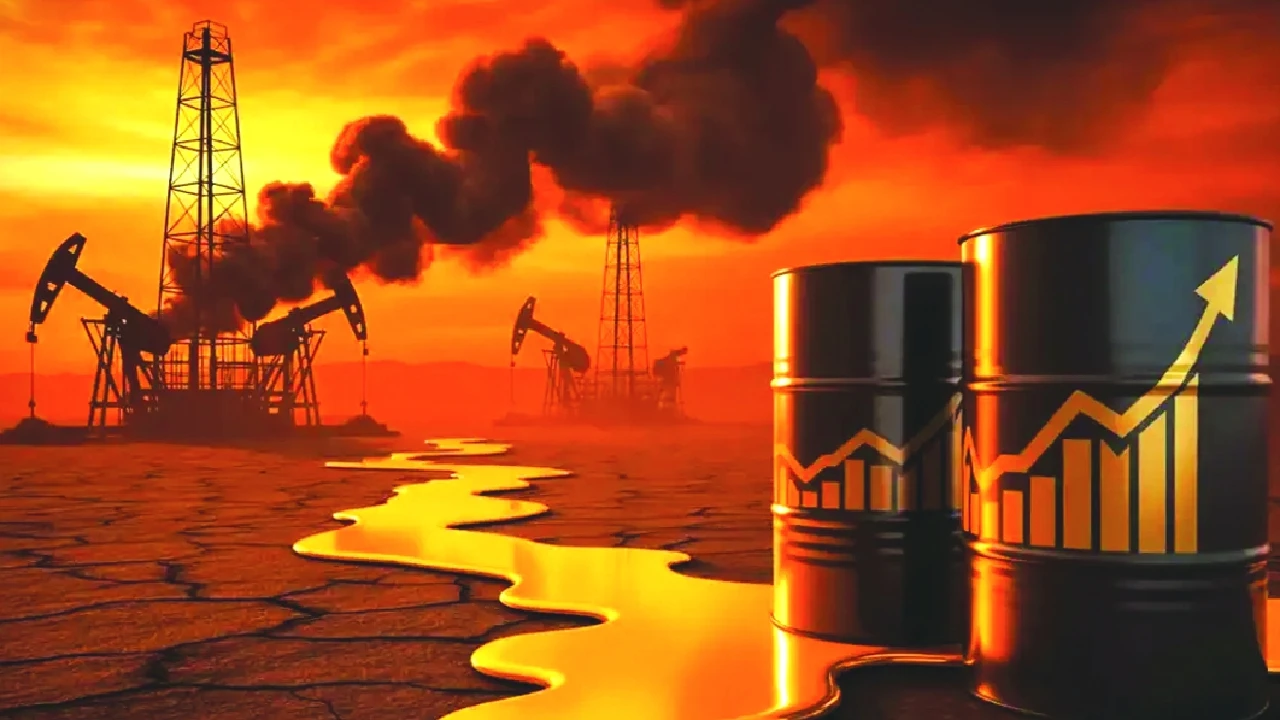
The energy markets responded almost immediately. With just days of peak military violence over the impending war with Iran, the price of oil showed a surge straight toward the $80-$90 range per barrel after two weeks of relative flatlining. It may seem mild in contrast to past crises, but economists hold that the geopolitical stakes are far greater than the figures suggest. The Middle East accounts for about a third of the global oil production, so if all the infrastructure and shippers were to be shut down, this would be a major paradigmatic shift in our understanding of interdependence and globalization of the energy system.
Among the concerns were those over the Strait of Hormuz, a narrow maritime corridor inclusive of at least one fifth of the total daily trade of oil worldwide. It seems that any kind of problem, however short-lived it could be, will have an unimaginably swift global impact on the markets.
For those policymakers struggling with inflation today, the current hike of oil prices brought up an awkward question: Are we indeed going to see another inflation shock?
It is a dreadful and unpredictable reality. Oil is no ordinary commodity, and the basis of the modern economy. It is indispensable for transport, industry, agriculture, logistics-a list that would run for pages-and its rise in price goes along with the price of everything that for the most part moves. Airlines get higher fuel bills. The trucking companies charge more for hauling the goods. Farmers horde with the high costs of diesel and fertilizer.
It is when one of these things ends on the shelves of the supermarket that the pinch drives your finger and says, “I am here.”
The economists have dubbed this “cost-push inflation” and have blamed it for causing the utmost economic wounds throughout recent times. The oil embargo of the 1970s kicked Western economies into years of stagflation-an ugly brotherhood joining unusually heavy inflation and no-growth.
Events may not appear as bad as the crisis, but the ingredients are certainly similar. A swift rise in energy prices was followed by signals issued from the bond market regarding fears for increased inflation, The worry is now related to the remaining length of the conflict.
The key phrase is “duration.”
A shorter conflict, represented by a small flare-up, would cause a temporary upsurge in prices. A protracted conflict, especially if it disrupts the shipment of oil in the Persian Gulf, could drive prices beyond the $100-barrel level, which would significantly add to global inflation, financial analysts warn.
Central Banks Will Be Trapped Again
Central banks will have to navigate a dilemma over what to do.
During the last couple of years, policymakers in Washington, Frankfurt, and Manila had lifted interest rates to flush out inflation from their respective economies; These attempts have started to bear fruit recently. But oil price shocks are a kind of inflation over which the central banks do not have total authority.
They lack the capacity to pull oil out.
So, central banks need to decide whether to send policy into more restrictive territory partly to fight higher inflation or to tolerate higher inflation in the hope that the energy shock disappears.
Some estimate that the effects will be only temporary. The U. S. Fed’s, St. Louis, explained on Wednesday that the short-term upward movement in oil prices caused by the war would not mean sustained inflation unless the conflict actually lasts for more than a few months.
Still, economists warn that the markets may be underestimating geopolitical risks.
Experience suggests that energy shocks very seldom remain confined within their sector.
The Asian Connection
Among all the regions, the risk is the most magnified in Asia.
Countries, among them old allies Japan, South Korea, India, and China, expect substantial Middle East oil inputs and derive much of these through the Persian Gulf trade lanes, now susceptible to military escalation.
If supply chains broke down, Asian economies — still trying to recover from the pandemic — could face a double blow, with large increases in energy prices and decelerated global trade.
Even small increases can have an impact. Scarcely 24 hours into the escalation of the conflict, the price of Brent crude had skyrocketed over ten percent, signalling an anticipation of lack in supply and traffic for tankers in the Gulf.
In emerging markets, where food and fuel represent a larger chunk of household expenditure, such increase in costs translates rapidly into social and political pressures.
The Philippines, for example, has already seen inflation creeping up with the rise in energy prices linked with the conflict.
Markets React First, but they’re Not the Final Word
After a geopolitical shock, financial markets usually react before the economy does.
The yield on bonds responds topically to this anticipation of inflation, which in turn elevates the cost of borrowing across the board on everything from mortgages to corporate loans.
In the meantime, energy companies and commodity traders luck up support gratify the business of warring markets, which is potentially causing the conflict to expand further, possibly even regional actors or ships navigating routes situated in that region.
In Gulf region, insurance premiums for tankers have wiped up, and tankers themselves confuse security concerns with their speed issues.
Risk mitigate; higher risk implies higher costs, which are passed on to higher energy prices.
Dislocation in a Post-Inflation World
However, there are yet further complications with the timing in this current setting.
The global economy had just about recuperated from its most intense inflation-induced ordeal in decades. Governments, central banks, and consumers were all hoping they had passed the worst.
The Iran war might just strike on those eyes again.
Moreover, even after oil prices might stabilize, the psychological impact on the markets will be substantial. In as soon as investors are considered to be afraid that inflation would return, financial conditions tighten, interest rates increase, and economic growth decelerates.
In a way, the shock does not have to go into the full-blown energy soap opera to be harmful.
Sometimes, the fear in itself will do.
Thus, in the backdrop of a world still recovering from a previous flowering of inflation would-be forced Hass sound the melodeon concerning: How fuel in the fire of geopolitics and oil might prove the most destabilizing force of all.