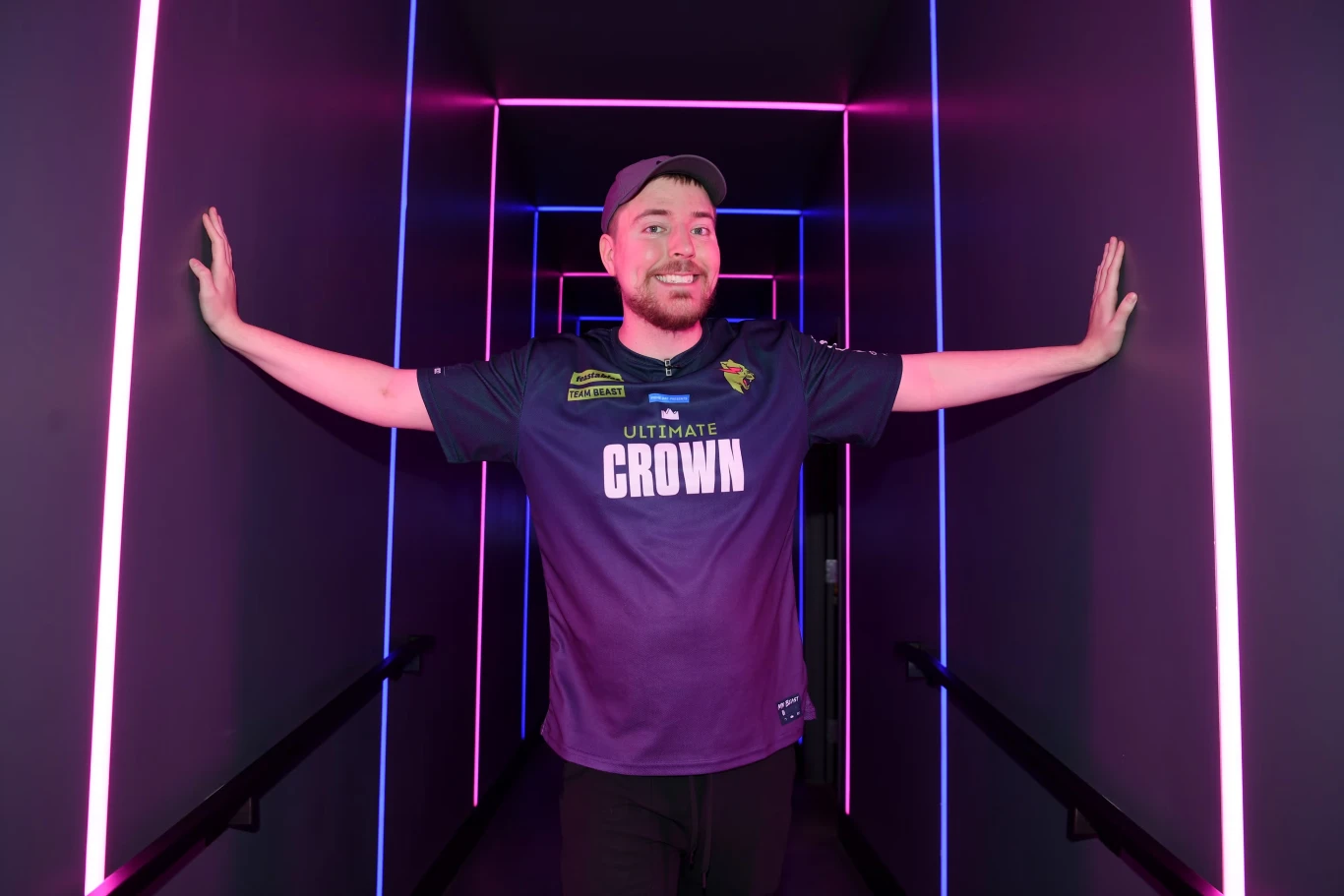
By the time Jimmy Donaldson was a teenager in North Carolina, he had already decided that YouTube was not just a hobby but a system to be mastered. Posting under the name MrBeast, Donaldson spent his early years studying thumbnails, watch time, and audience retention with the intensity of a graduate student dissecting case law. The viral stunts and nine-figure business empire would come later. First came the obsession with understanding why people click.
Donaldson launched his channel in 2012 at age 13. The early uploads were unpolished gaming videos and commentary, but by his late teens he had begun experimenting with endurance-style challenges — counting to 100,000 on camera, watching a single music video for 10 hours, or reading the dictionary aloud. The formula was simple but psychologically sharp: take an absurd premise and push it to a scale that demanded attention.
That instinct for scale would become his signature. Over time, MrBeast’s videos evolved into high-budget productions built around spectacle and generosity, giving away cars, houses, and millions of dollars in cash prizes. In 2021, his recreation of the Netflix series Squid Game as a real-life competition (without the lethal consequences) drew hundreds of millions of views and marked a turning point. YouTube was no longer just a platform for viral clips; in MrBeast’s hands, it resembled a studio system.
Today, his main YouTube channel counts well over 200 million subscribers, placing him among the most-followed creators in the world. Across multiple channels, including gaming, philanthropy, and short-form content, his global reach extends even further. His videos are dubbed into numerous languages, reflecting a strategy aimed at international dominance rather than domestic popularity.
But virality alone does not explain his influence. Donaldson is also a businessman who has translated digital attention into physical products. In 2022, he launched Feastables, a chocolate and snack company positioned as a cleaner-ingredient alternative to traditional candy bars. The brand expanded rapidly into major retail chains across the United States and abroad, signaling that his audience could convert into consumers at scale.
Earlier, he co-founded MrBeast Burger, a delivery-only fast-food concept operating through ghost kitchens. At its peak, the brand partnered with hundreds of locations, though it later faced legal disputes over quality control and brand standards. The venture underscored both the promise and volatility of influencer-driven businesses.
Philanthropy is another central pillar of Donaldson’s public identity. Through his channel Beast Philanthropy, he funds food banks, builds homes, and supports community projects. In 2019, he helped organize Team Trees, a campaign that raised over $20 million to plant 20 million trees worldwide. He later co-launched Team Seas, which raised tens of millions more to remove trash from oceans and waterways.
Critics have occasionally questioned whether large-scale giveaways blur the line between charity and entertainment. Donaldson, for his part, has been candid about the economics: higher view counts generate more ad revenue, which funds even larger giveaways, which in turn generate more views. It is a feedback loop powered by spectacle and reinvestment. Unlike many creators who diversify away from platform dependency, he has repeatedly said his strategy is to spend as much as possible on the next video, betting that scale will compound.
That approach has redefined expectations for YouTube production values. What began as bedroom vlogging now often resembles television-level staging: custom-built sets, hundreds of contestants, and prize pools in the millions. Industry observers frequently compare his model to game shows or reality competition formats, albeit optimized for algorithmic distribution rather than network scheduling.
Donaldson has also been transparent about burnout and the psychological toll of constant escalation. In interviews and podcasts, he has described working long hours, obsessing over performance metrics, and feeling pressure to outdo previous uploads. Yet he frames the grind as part of a larger ambition: to become the biggest content creator in the world and to use that scale for impact.
Financially, estimates of his net worth vary, but analysts widely consider him among the highest-earning digital creators globally. Brand deals, ad revenue, merchandise, and consumer products form a diversified portfolio that rivals traditional media entrepreneurs.
What distinguishes MrBeast is not merely generosity or extravagance, but systems thinking. He treats YouTube as both a laboratory and a launchpad – testing audience psychology while building durable businesses. In doing so, Jimmy Donaldson has helped reshape the creator economy, proving that a teenager with a webcam can, through relentless iteration, build a global media enterprise.
Whether admired for philanthropy, scrutinized for spectacle, or studied for strategy, MrBeast represents a new archetype: the algorithm-native mogul, fluent in attention and unafraid of scale.