
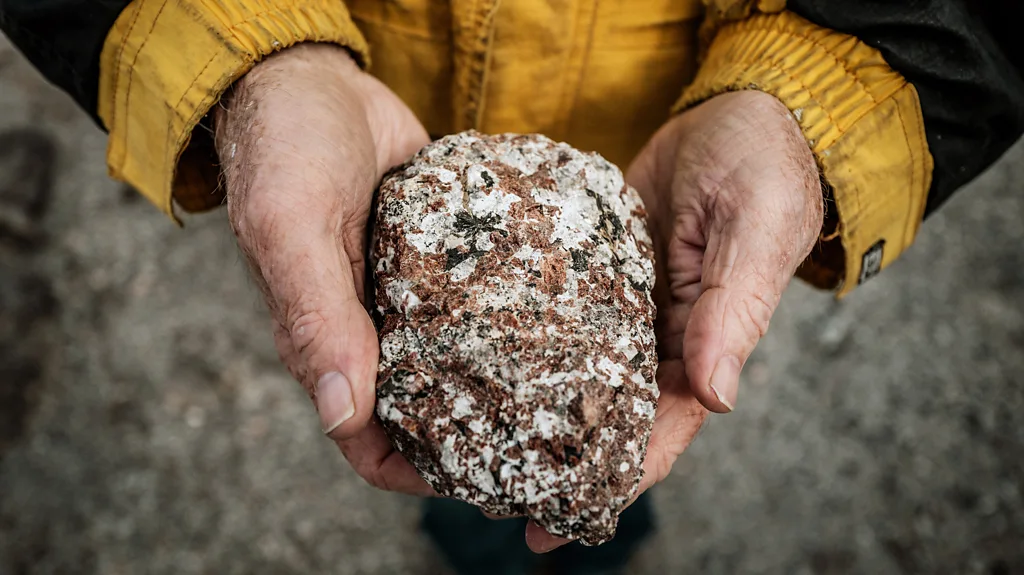
Debris from some of the world’s largest rare‑earth repositories in Inner Mongolia is pathetically unreachable. The Baogang Tailings Dam has arisen in the vast area to symbolize the expansion of modern extractive capitalism. For it is the waste dumped from the exploitation of rare earth that is unleashed in organic hazard ordered by smartphones and topless wind turbines. This flat refuse could then be identified as a sign from the great world of tech, the one between our need for rare earth and what might look taken for granted in extracting it.
Now, what if we take the non-invasive process of invisible fungi, which, under proper circumstances, could be intensively mining the early stages of development under the debris instead of making this dead business? This even marginally changes the trajectory of faster and safer reassessment to our planet’s new bureaucratic imperative when green and sustainable deep solid materials get in the matter on the world stage.
An Area Despoiling The Core Material
The way and pace of development in this era resulted in an accumulation of rare earth elements (REEs), a group made up of seventeen metals including cerium, neodymium, and lanthanum. These are metals that matter greatly to everything running on power, like electric car engines, high-tech medical devices, and defense systems. Yet the established way of obtaining them is anything but green. It is based on an overall waste disposal of approximately 2,000 metric tons for every one singular metric ton of rare earths extracted, leaving behind heavy metals, toxic residues, and radioactive byproducts leaking into the atmosphere and contaminating soils and waters.
Such waste mounts are piled into giant slag heaps and tailings dams that now tower above city skylines, in locations like the greater Bayan Obo mining district, which hosts the world’s richest known rare earths. The resorts of the past – remnants of the 20th-century extractive model-form with them a paradoxical combination: They contain valuable rare earths that can be reclaimed without ever blasting another meter of rock.
From Soil Decomposer to Element Harvester
There is nothing new about the use of biological organisms in metal extraction. In an experimental setting, microbes have been used in biomining for many years, to handle copper and gold. But fungi are wherein these reshaping protagonists in this rather surprising one. Their natural metabolism is capable of breakage of complex mineral structures and allows sequestration of metals by acid production and chemical complexation, a general modus operandiery under the heading of “bioleaching.”
Literature and experimental observations indicate that Aspergillus niger and other filamentous fungi could leach rare-earth elements (REEs) from waste materials such as phosphors of the fluorescent lamp and industrial residues. The organic acids produced by these fungi by themselves – say, oxalic, citric, and gluconic acids – dissolve REEs condensed within wastes and mobilize them into solutions, from where they can be recovered.
Recent works focus on newer fungal strains like Talaromyces pseudofuniculosus, which can tolerate high concentrations of rare earths and use them to release elements like lanthanum, cerium, and neodymium in concentrates from tailings. These studies suggest that fungi might be adapted in bioleaching to target specific metals, including metals that even the most sluggish physical-chemical route had difficulty unlocking from barren, slag heap wastes that represent years of mining.
A Tale of Tailings
These massive tailings of desolation carry a mutation; it is from these waste piles that critical materials for the future might come. It is known that the tailings dams and industry residues emanated from phosphogypsum production (an offshoot of fertilization manufacturing) that hold upon their discards a discernable concentration of REEs mingled with the practically worthless bulk previously viewed from the perspective of an economic sight. Researchers have managed to demonstrate the significant extraction of some of the rare earths by the fungal culture, with the added advantage of a superior efficacy in comparison to some harsh chemical leaching situations.
The reintroduction of waste as a feedstock, rather than a liability, necessarily fights hierarchical value systems and, in its unique form, creates a fight-back model to linear wastage. By the retrieval of REEs from waste, the environment would see less damage and the supply chain could be diversified from the few countries that stand to benefit the most.
Fungi-Mediated Extraction for a Greener Future in Critical Minerals
The implications of the extraction of REEs through fungal efforts are quite critical. A system that takes metals from the waste heaps and industrial leftovers is contained in waste reduction, mined area, and proper tailings disposal, fostering a more circular industrial ecosystem in addition to alleviating geopolitical pressures in common metal procurement areas.
Several hurdles yet exist. The scale of bioleaching processes is generally much slower than that of classic chemical methods whereby, without major breakthroughs in bioprocesses, logistics, and possibly in regulation, large-scale use is impossible. Moreover, the extraction of metals from low-grade waste materials, while a dream itself, remains a rigorous task as the dilute elements have to be separated through favorable conditions from large quantities of substances, which can be technically and economically quite challenging.
However, the promise of fungal biomining as one front in the overall battle for sustainability appeals to the very same researchers and “greens.” As countries posture themselves around issues relating to rare earth access, in their quest to shore up supply chains for clean energy technologies, the world might be turning even more to solutions that don’t involve the blowing up of mountains or filling their rivers with toxic sludge.
The World Reimagined Through Fungi
On the forest floor, fungi break down leaves and thus amass fuels through intricate interlinkages beneath soil for transport of carbon and nutrients; an even promise for the quiet, humble architects of the biological may dissolve a few of our hardest dates with the environment-dilemmas in thereby operating high-end technologies while repeating the catastrophe of the past-ever.
Once delegitimized by being synthesized, if implemented, the bio-based methods engineered by industry might disengage human perceptions from the jargon “mining without rocks” to drift over to the next chapter in the development of sustainable mining.